We're responsible for building-----we're responsible for manufacturing-----we're responsible for training

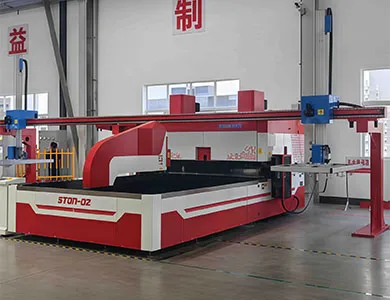
Instead of manually moving sheets between separate machines, an automatic sheet metal production line organizes each process into a coordinated system. STON designs and manufactures customized lines based on your products, capacity targets and workshop layout. Typical configurations include automatic loading, CNC turret punching or laser cutting, panel bending or press braking, flanging and automatic stacking or unloading. This reduces manual handling, stabilizes quality and improves overall equipment efficiency for electrical cabinets, lockers, doors, ventilation ducts, kitchen equipment and many other sheet metal products.
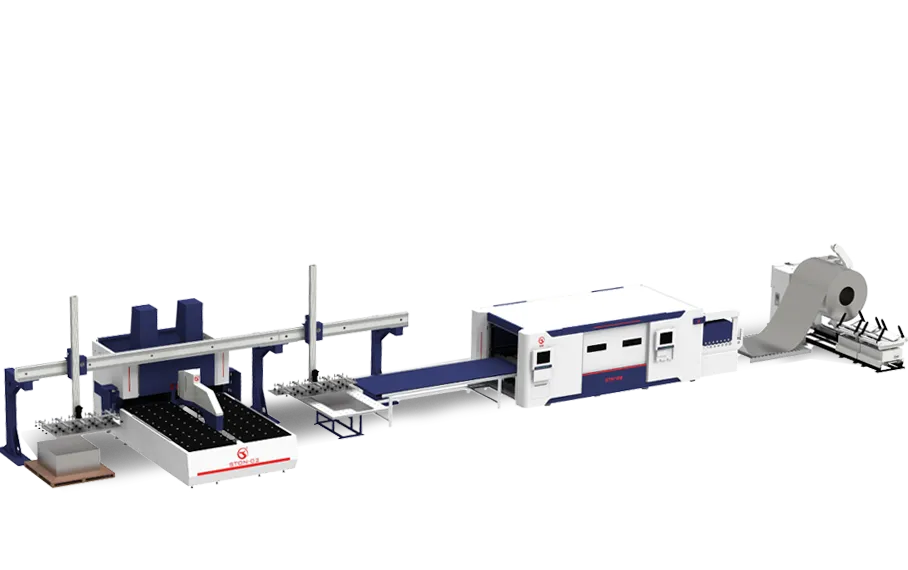
By combining accurate machines with stable material flow, the STON automatic sheet metal production line keeps every part within tight tolerances while maintaining high throughput. From blank loading to finished panels, each station is engineered to minimize deviation, scratching and rework.
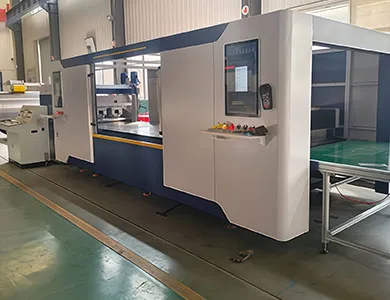
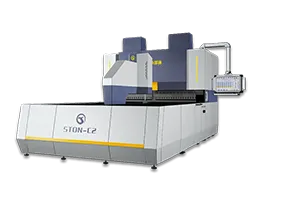
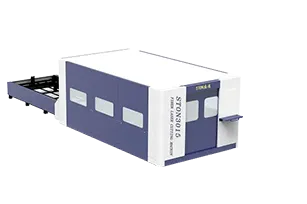
Laser Cutting
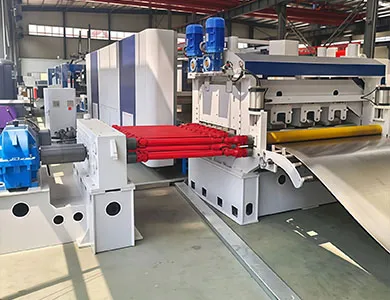
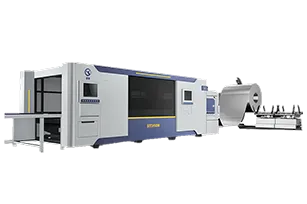
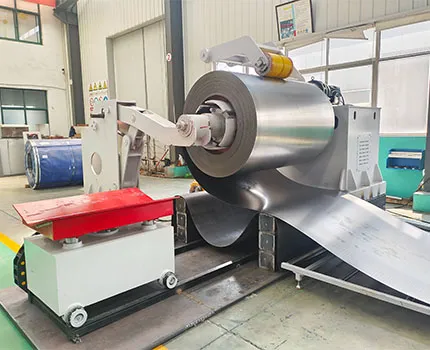
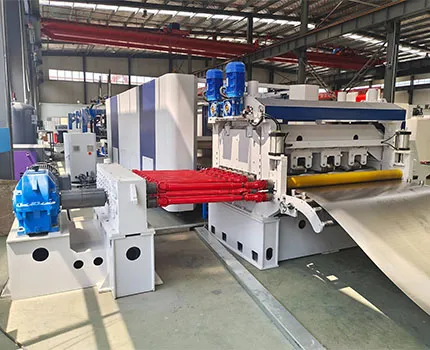
Uncoiling and Leveling Module
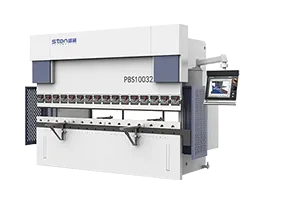
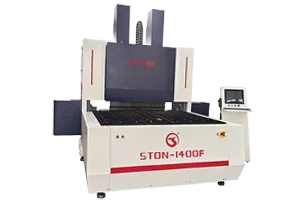
Forming Modul
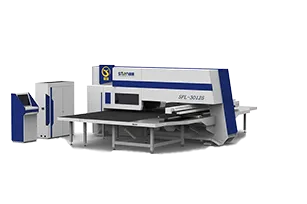
Blanking Module
Compared with separate standalone machines, an automatic sheet metal production line significantly reduces handling time, labor intensity and production errors. The following features help you get more qualified parts per shift with better cost control.
Automatic loading, transfer and unloading between stations
Less manual carrying and waiting time
Stable takt time for mass production orders

Flexible combination of punching, laser cutting, bending and flanging
Line design based on your product structure and future expansion
Suitable for cabinets, doors, lockers, ventilation and more
Fewer handling steps reduce scratches and deformation
Coordinated machines keep dimensions consistent across processes
Lower scrap rate and fewer quality complaints
Fewer operators needed to manage the whole line
Ergonomic design reduces heavy manual work
Easier planning of staff and shifts
Line control system supervises each station and flow status
Real-time production data for management and optimization
Easy to pause, adjust or restart the whole line when needed
Compatible with robots, storage towers and AGV systems
Room for adding new stations or upgrading single machines
Protect your investment as product mix and volume change
In a traditional workshop, every manual transfer creates opportunities for damage and dimensional errors. The STON automatic sheet metal production line keeps sheets on controlled paths, with precise positioning at each station. Punching or cutting is aligned with bending and flanging, so holes and edges match perfectly in the final assemblies. This stability improves fit-up in welding and final assembly, shortens troubleshooting time and supports consistent quality over long-term production.
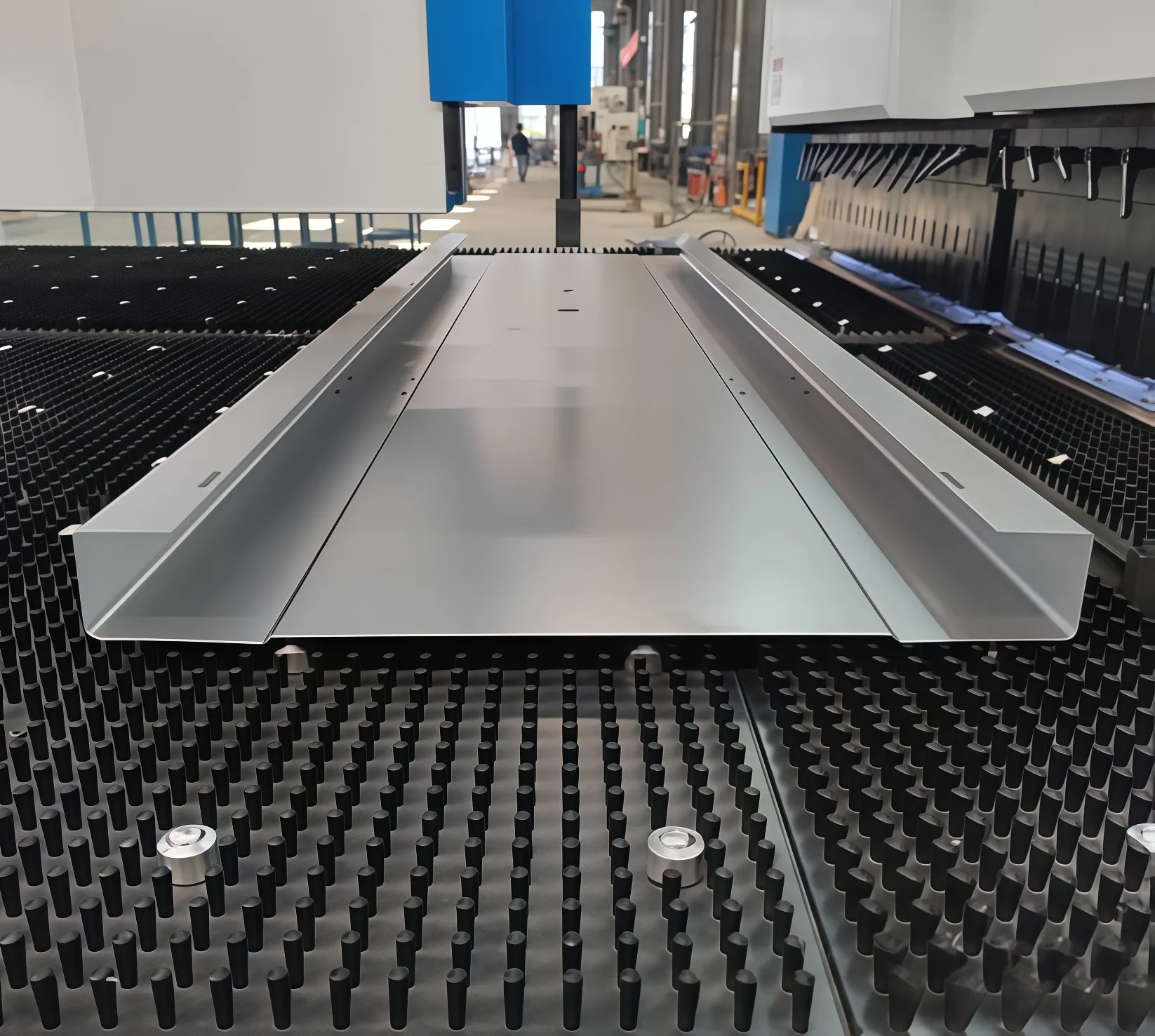
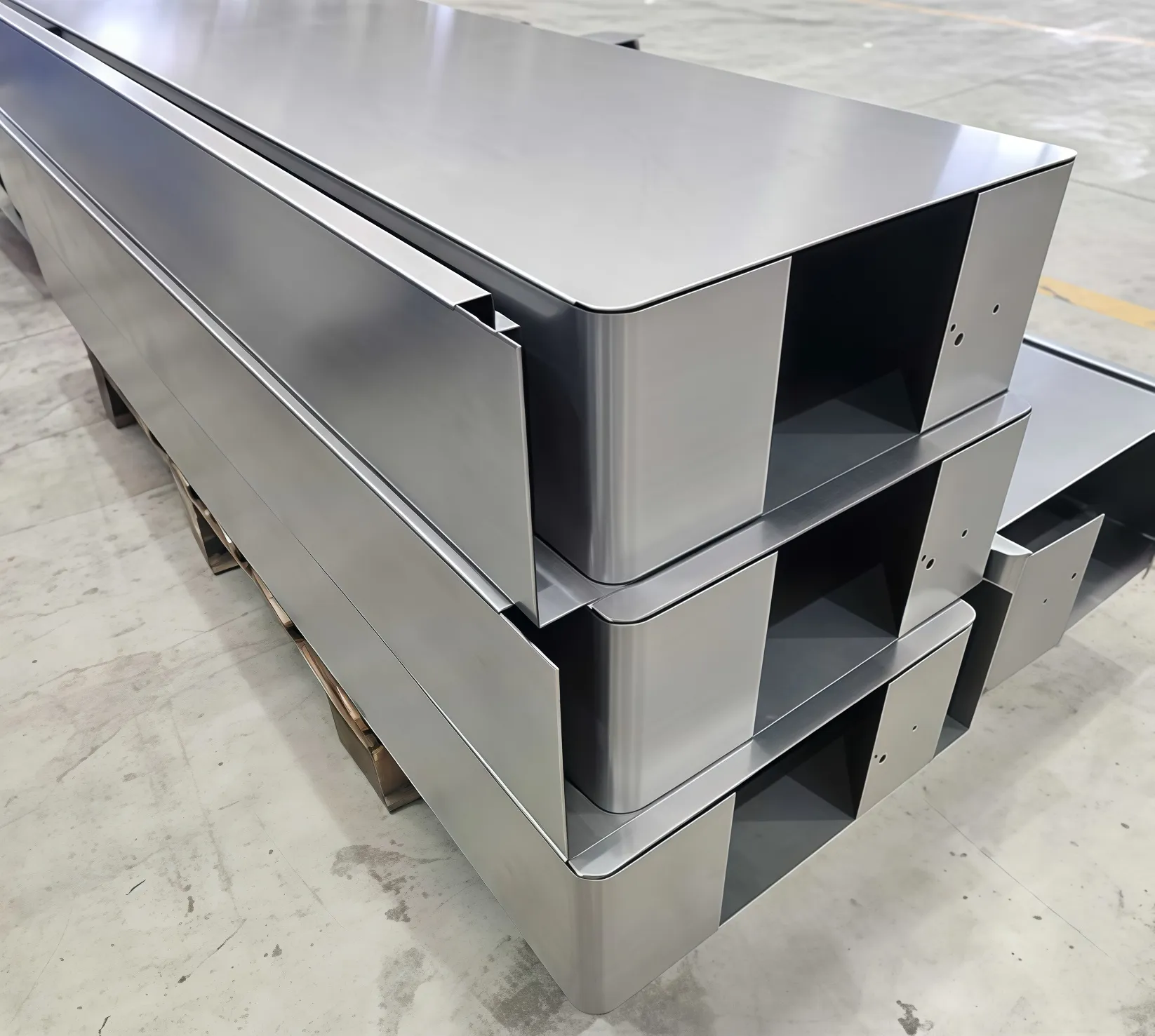
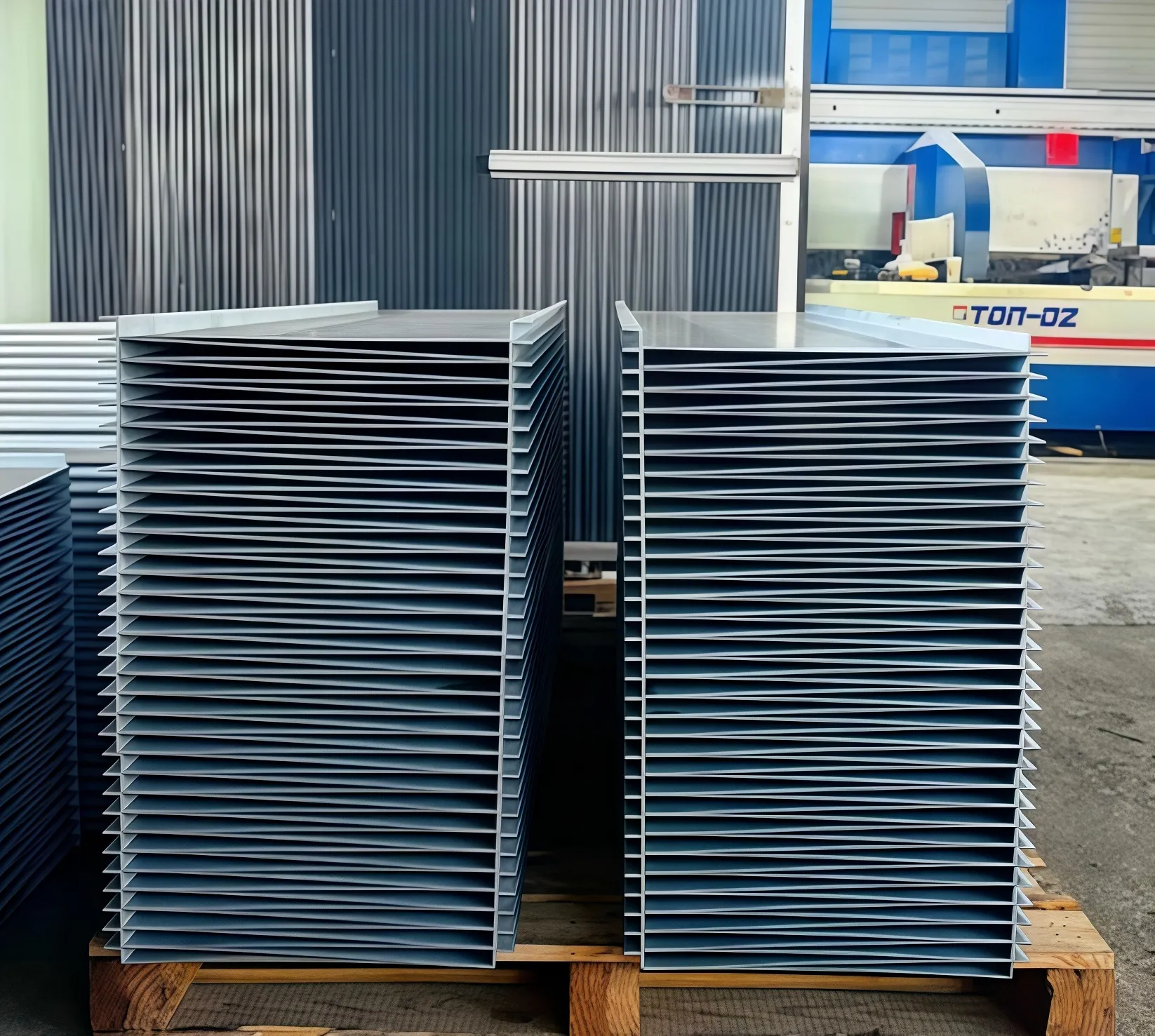
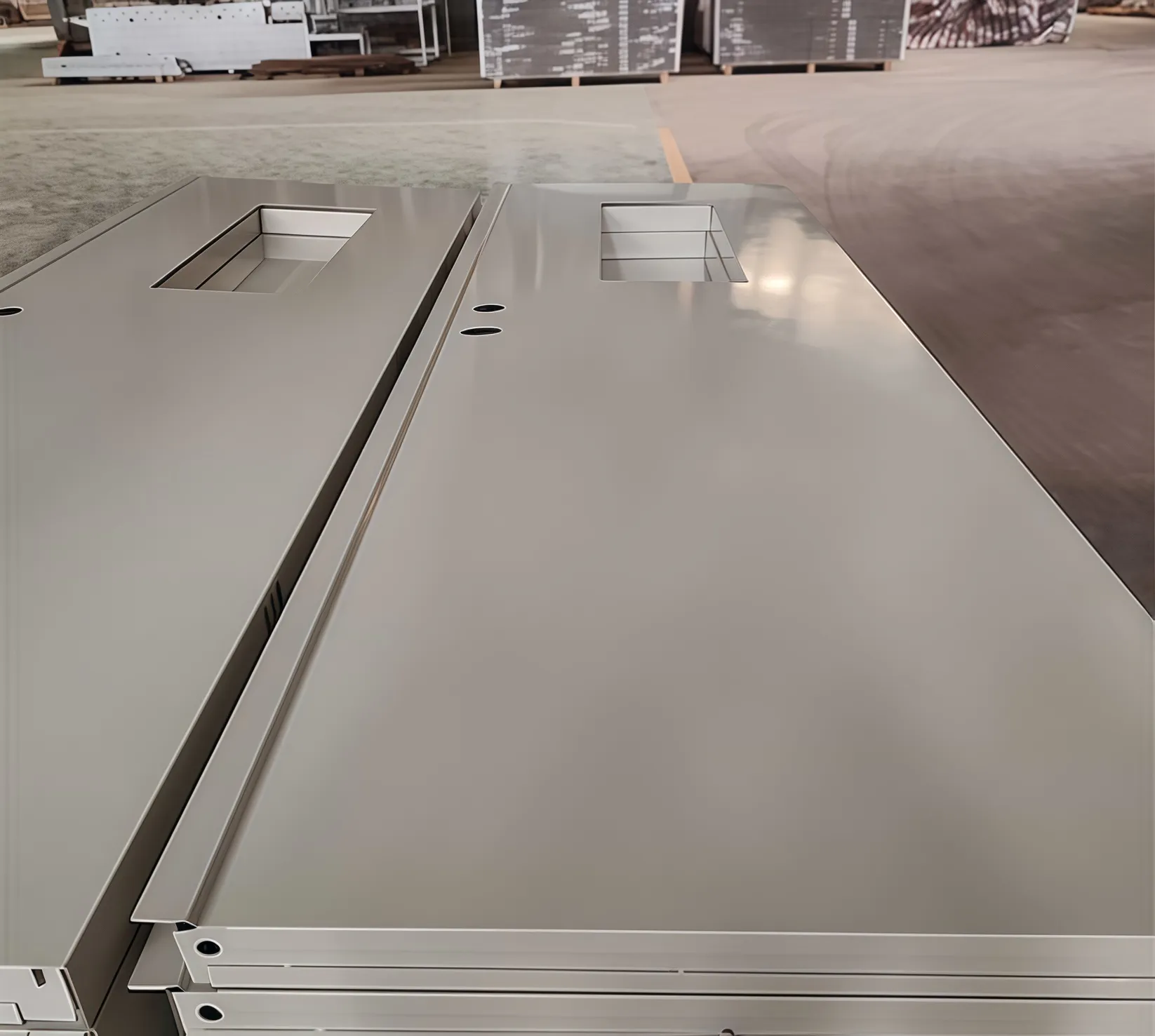
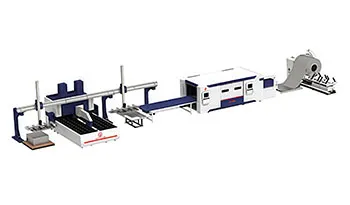
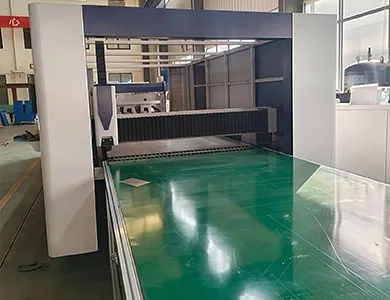
The fully automatic production line for laser cutting and bending includes coil rack, leveling device, laser machine, material receiving platform, panel bender(or turret punch press),centering platform and truss(or robot arm).Customized,the parameters of the production line are determined according to the customer’s steel coil size, weight, plate material and thickness as well as product drawings.
Automatic loading systems can include sheet stacks, suction lifters, destackers and sheet alignment devices. They separate and position each sheet accurately on the infeed side, protecting the surface and ensuring smooth entry into the first processing station.
According to your product requirements, the line can be equipped with a CNC turret punch press, fiber laser cutting unit, or a punch & laser combined machine. This section completes all required holes, slots and profiles, preparing blanks for downstream bending and forming processes.
The bending section usually consists of CNC panel benders or press brakes, automatically receiving punched or cut blanks. Coordinated positioning ensures that bends match the previous features, forming cabinet doors, side panels, drawers and other components efficiently.
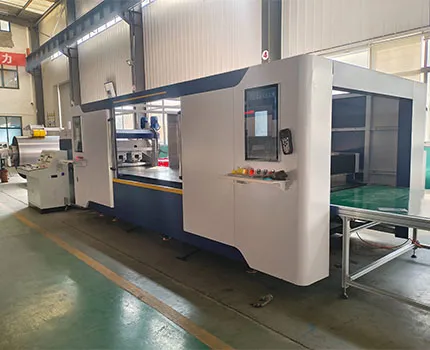
Flanging machines and forming stations handle special edges, hems and reinforcement features required for doors, drawers and structural parts. Integrating them into the line guarantees consistent flange height and shape, reducing manual operations.
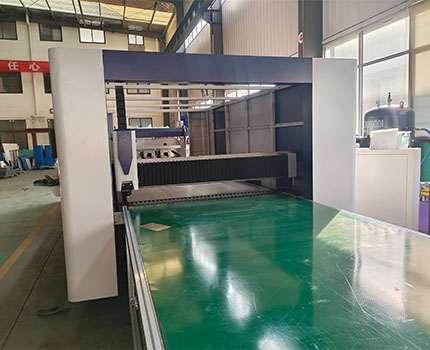
Roller conveyors, belt conveyors, lifters and buffer zones coordinate part flow between stations. They balance cycle times, absorb short stops and protect parts from collision, ensuring that each machine runs at optimal efficiency within the whole line.
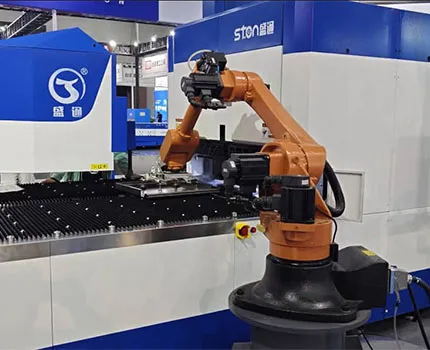
The centralized line control system links all stations and safety devices. Operators can start, stop and monitor the entire line from one interface. Safety fences, light curtains, emergency stops and interlocks provide protection for personnel while maintaining high availability of the equipment.
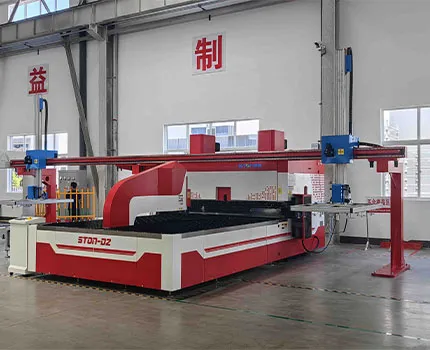
The bent sheet metal parts are transferred by the robot to the manipulator welding forming station. The manipulator welding forming equipment is equipped with a high-precision welding system and a visual tracking system, which can automatically select the appropriate welding process (such as argon arc welding, spot welding, etc.) and welding parameters according to the welding requirements of the sheet metal parts. During the welding process, the visual tracking system monitors the weld position in real time and guides the manipulator to accurately complete the welding operation, ensuring that the weld is uniform and firm, and the welding quality is stable and reliable.
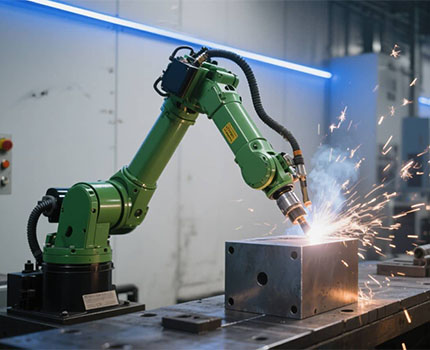
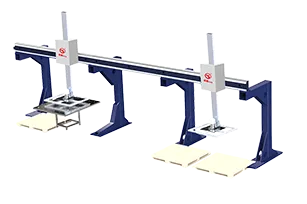
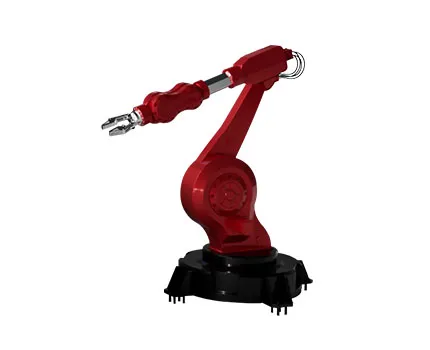
There are two forms of automated loading and unloading: truss and robotic arm
(1)The robotic arm grabs the sheet metal parts that have been processed by leveling, laser cutting and other preliminary processes from the processing area with its flexible joints and precise positioning capabilities. The grabbing device at the end of the robotic arm can be adaptively adjusted according to the shape and size of the sheet metal parts to ensure a smooth and reliable grabbing process and avoid damage to the workpiece. After grabbing, the robotic arm quickly transfers the sheet metal parts to the starting position of the truss conveyor track.
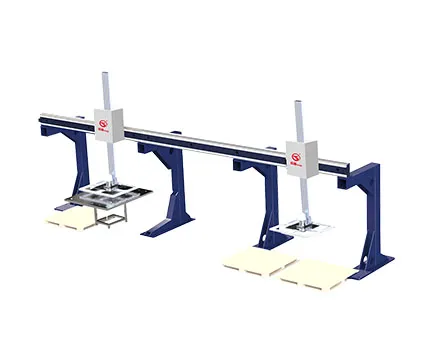
(2)The truss automation system offers a cost-effective solution for stable, high-load transfer of sheet metal components. Powered by servo drives, it ensures fast and precise positioning along predefined tracks—enhancing the speed and reliability of the overall sheet metal production line.
We believe in building strong, transparent relationships with our clients. That’s why we invite our partners to visit our state-of-the-art manufacturing facility and see our production process up close.
 Anthony
Procurement Manager, HVAC
Component Factory (Germany)
 Jeffrey
Factory Owner, Stainless Kitchenware
Manufacturer (USA)
 Jared
Jared– Operations Director, Electrical Cabinet
Factory (Canada)
Our machines is suitable for common sheet metals such as stainless steel, carbon steel, aluminum alloy, and galvanized sheet. The thickness range is 0.2mm-6mm, meeting needs of various industries, including home appliances, hardware, and cabinets. It also supports asymmetric and complex customized processes.
Yes, we offer a one-stop service: “on-site installation + commissioning + customized training.” Professional engineers will visit the customer’s site to complete production line assembly and equipment integration commissioning to ensure the line reaches its designed capacity. We also provide theoretical and practical training for operators (6-8 days), covering equipment operation, routine maintenance, and troubleshooting. After the training, we provide an operator manual and video tutorials.
Customized services are available. We will optimize the machine structure based on the customer’s workshop space, load capacity, and processing requirements. While ensuring processing accuracy, we adapt the machine to the shop’s existing power and air supply conditions to ensure smooth installation and efficient operation.
We have established a 24-hour global after-sales response mechanism: Customers can submit troubleshooting reports via phone, email, or online customer service, and a preliminary solution will be provided within 1 hour. If remote debugging is required, an engineer will provide video guidance within 2 hours. For hardware repairs, domestic customers will receive a visit within 48 hours, while overseas customers can use authorized service centers or expedited delivery of parts (with installation instructions) to ensure a quick resolution.
All of our standard equipment (flexible bending centers, CNC turret punch presses, press brakes, and punching and shearing machines) comes with a one-year free warranty. For some products with higher system complexity, the warranty period can be extended to 18 months. The warranty covers repair and replacement of quality issues with core components (such as servo motors, CNC systems, and guide rails), as well as free on-site inspections during the warranty period. Please note that equipment failures caused by human error, force majeure (such as floods and earthquakes), or failure to follow the maintenance manual are not covered by the free warranty, but paid repair services are available.
Extended warranties are available, with coverage ranging from 1 to 3 years. These plans are customized based on the equipment type, frequency of use, and customer needs. A one-year extension for a single device costs approximately 3%-5% of the total price, while bulk extensions for multiple devices or fully automated production lines offer a 20% discount. During the extended warranty period, in addition to core component repairs, customers also receive a free annual comprehensive equipment inspection and maintenance service to help them proactively identify potential faults and extend the life of their equipment.
We offer flexible payment options to meet the needs of domestic and international customers: ① Telegraphic Transfer (T/T): 30% prepayment, 70% before equipment leaves the factory; ② Letter of Credit (L/C): We accept irrevocable letters of credit issued by the customer’s partner bank at sight to ensure the security of funds for both parties. All payment methods comply with international trade practices and support mainstream settlement currencies such as the US dollar and the euro.
A sheet metal production line is a fully automated system that integrates uncoiling, leveling, laser cutting, bending, and material handling to process metal sheets or coils into finished parts. Using coil-to-cut automation, the system feeds raw coils through laser cutters and bending centers, delivering high-precision components efficiently and with minimal manual intervention.
Compared to traditional sheet-fed systems, a coil fed sheet metal production line provides:
Continuous processing with fewer material changeovers、Up to 50% increase in throughput、Reduced material waste through optimized nesting、Lower labor costs with automated laser cutting and bending、Enhanced precision for high-volume production
Yes, our coil-to-cut automation systems are fully customizable. The configuration is based on your specific coil width, weight, material type (e.g., stainless steel, aluminum, galvanized), and desired part geometries. The line supports various modules like servo feeding, laser cutting automation, and robotic bending stations to meet diverse industrial needs.
Industries that require high-speed, high-precision, and repeatable sheet metal fabrication benefit greatly from these lines. Common applications
By integrating automated laser cutting into the sheet metal production line, manufacturers benefit from precise, high-speed processing with minimal human error. The system reads digital designs (DXF/DWG) directly, auto-nests parts for optimal material usage, and enables uninterrupted coil fed laser cutting, significantly reducing cycle times and increasing output quality across applications like HVAC, cabinets, and electrical enclosures.
Typical applications include electrical cabinets, switchgear, lockers, metal furniture, doors, ventilation ducts, kitchen equipment and other products with repetitive panel parts.
Yes. In many projects we start by integrating existing punching or laser machines with loading and unloading, and then add bending and forming stations later. We will design a roadmap based on your budget and future plans.
Our engineers study your drawings, material types, batch sizes, takt time and workshop layout. Based on this information, we propose a process route and choose suitable machines, transfer systems and automation levels.
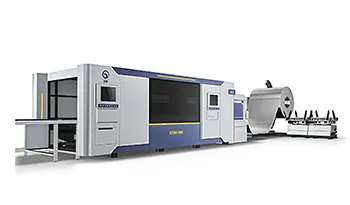
Whether you're upgrading an existing line or starting a new project, STON will customize a CNC solution for your production.