Somos responsables de la construcción-----somos responsables de la fabricación-----somos responsables de la formación

Instead of manually moving sheets between separate machines, an automatic sheet metal production line organizes each process into a coordinated system. STON designs and manufactures customized lines based on your products, capacity targets and workshop layout. Typical configurations include automatic loading, CNC turret punching or laser cutting, panel bending or press braking, flanging and automatic stacking or unloading. This reduces manual handling, stabilizes quality and improves overall equipment efficiency for electrical cabinets, lockers, doors, ventilation ducts, kitchen equipment and many other sheet metal products.
By combining accurate machines with stable material flow, the STON automatic sheet metal production line keeps every part within tight tolerances while maintaining high throughput. From blank loading to finished panels, each station is engineered to minimize deviation, scratching and rework.
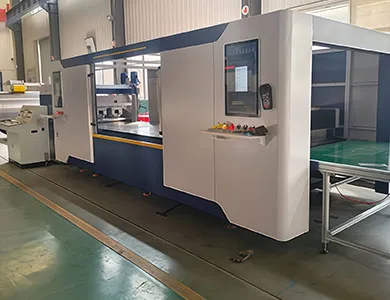
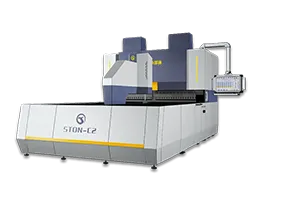
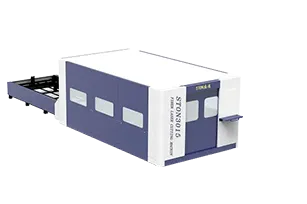
Laser Cutting
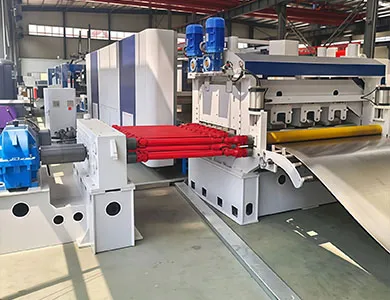
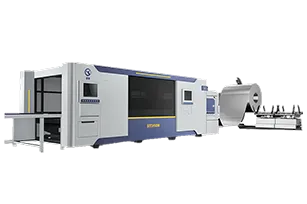
Uncoiling and Leveling Module
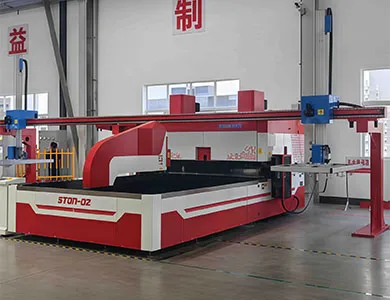
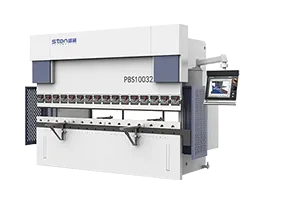
Forming Modul
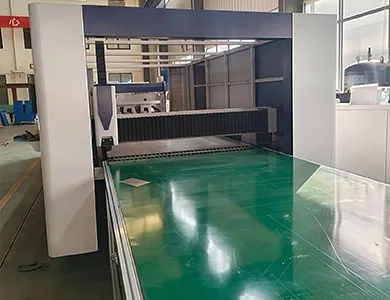
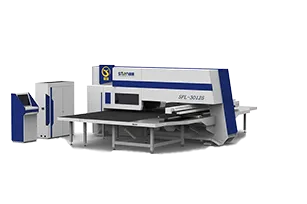
Blanking Module
Compared with separate standalone machines, an automatic sheet metal production line significantly reduces handling time, labor intensity and production errors. The following features help you get more qualified parts per shift with better cost control.
Automatic loading, transfer and unloading between stations
Less manual carrying and waiting time
Stable takt time for mass production orders

Flexible combination of punching, laser cutting, bending and flanging
Line design based on your product structure and future expansion
Suitable for cabinets, doors, lockers, ventilation and more
Fewer handling steps reduce scratches and deformation
Coordinated machines keep dimensions consistent across processes
Lower scrap rate and fewer quality complaints
Fewer operators needed to manage the whole line
Ergonomic design reduces heavy manual work
Easier planning of staff and shifts
Line control system supervises each station and flow status
Real-time production data for management and optimization
Easy to pause, adjust or restart the whole line when needed
Compatible with robots, storage towers and AGV systems
Room for adding new stations or upgrading single machines
Protect your investment as product mix and volume change
In a traditional workshop, every manual transfer creates opportunities for damage and dimensional errors. The STON automatic sheet metal production line keeps sheets on controlled paths, with precise positioning at each station. Punching or cutting is aligned with bending and flanging, so holes and edges match perfectly in the final assemblies. This stability improves fit-up in welding and final assembly, shortens troubleshooting time and supports consistent quality over long-term production.
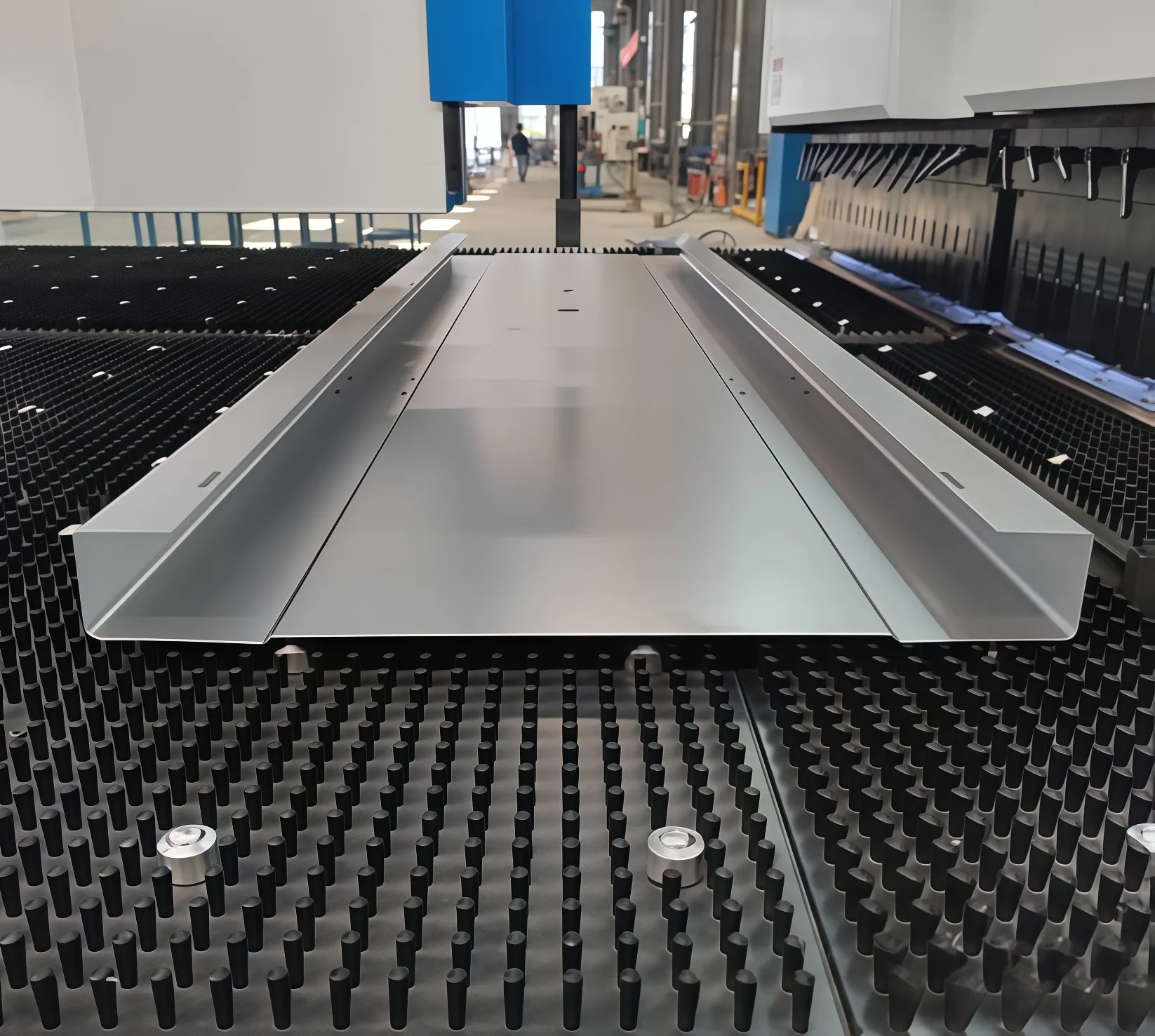
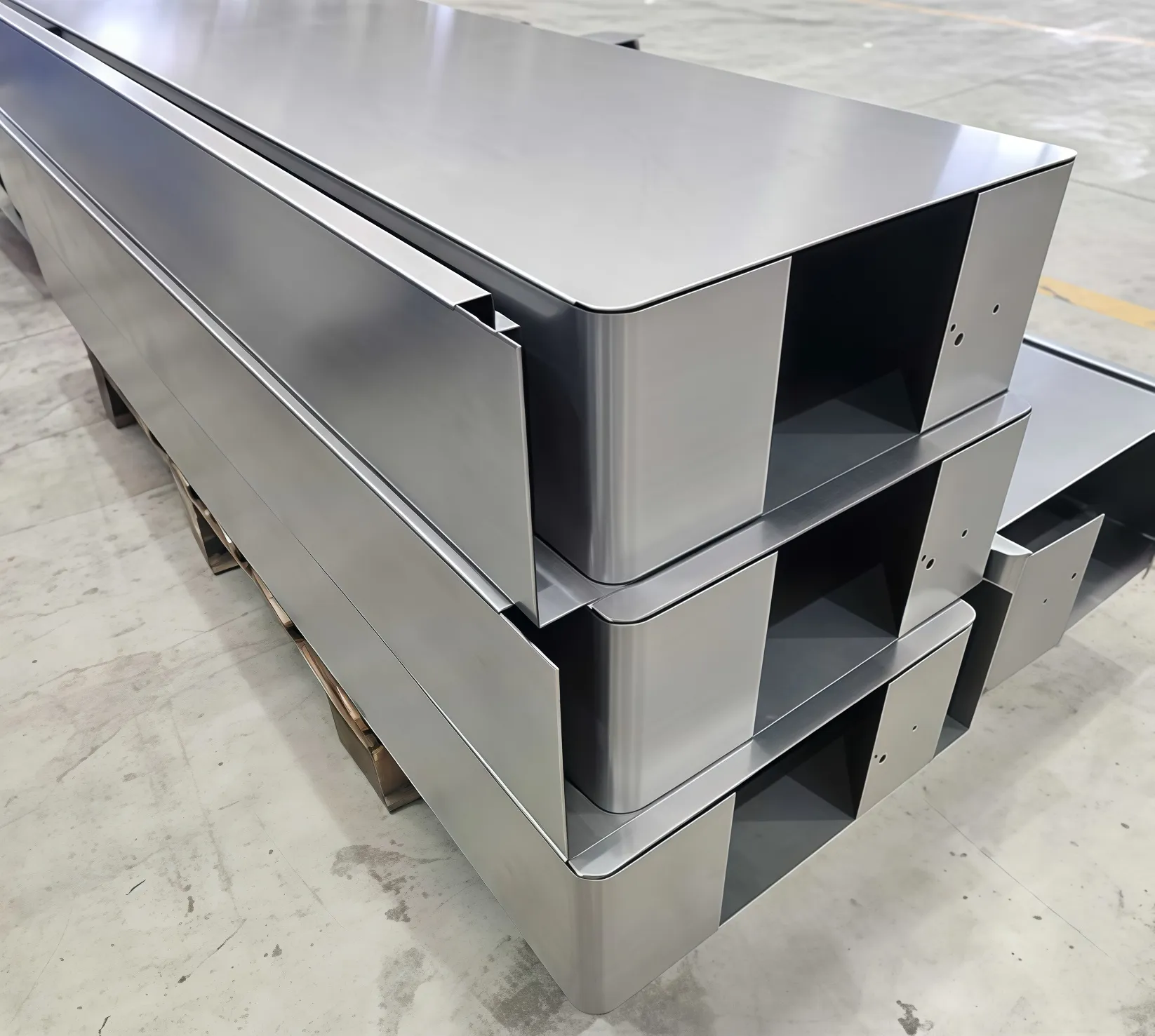
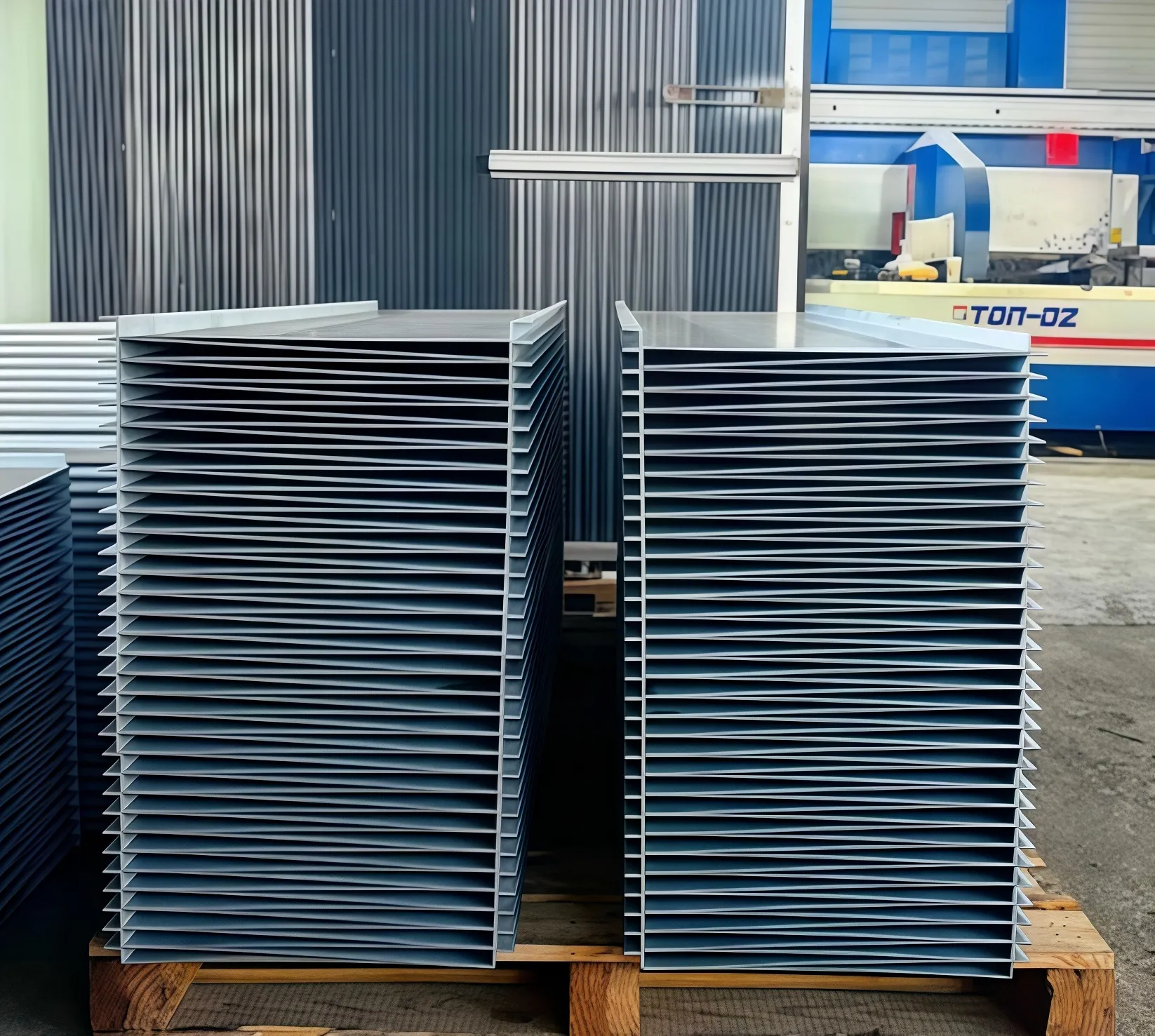
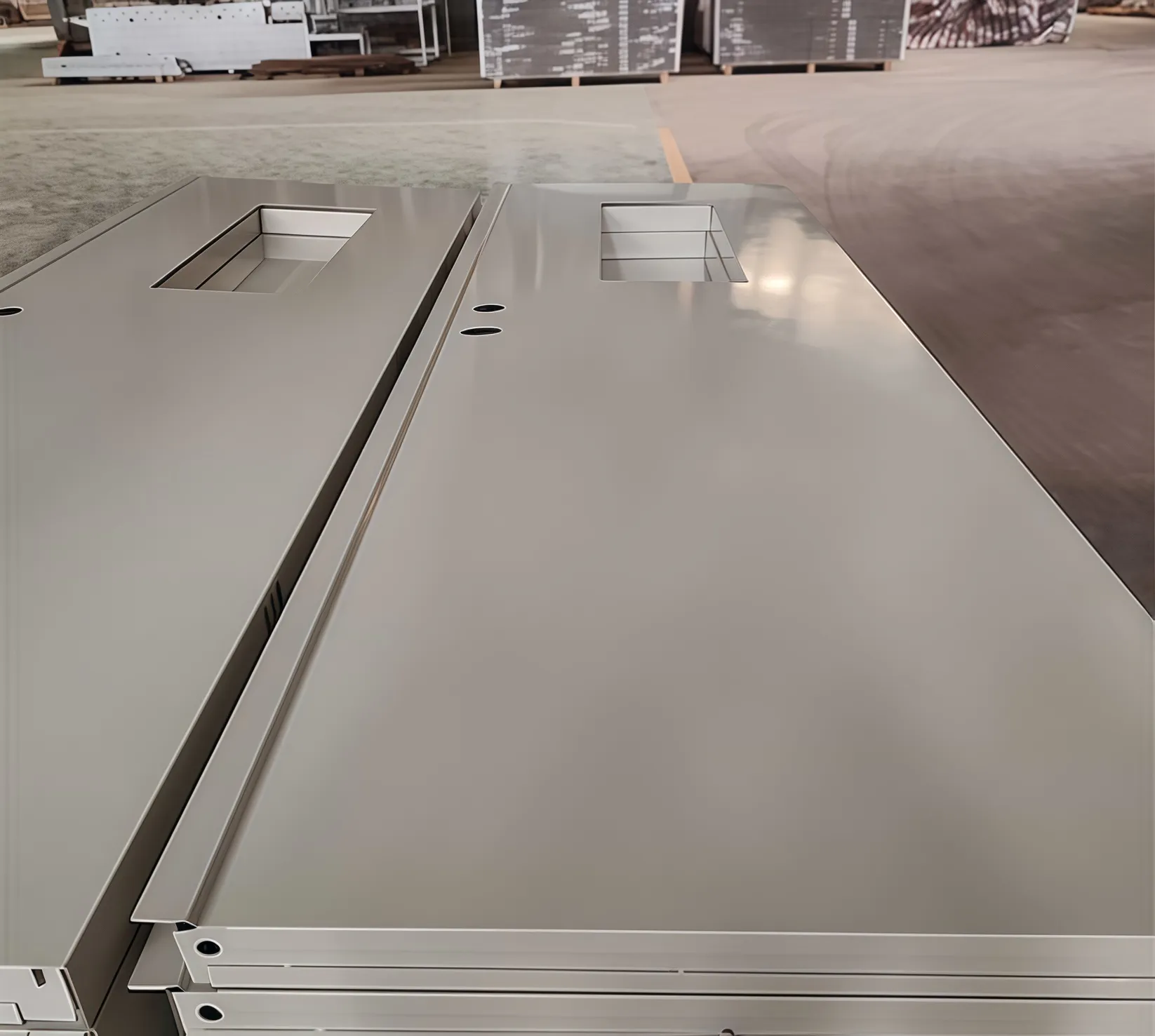
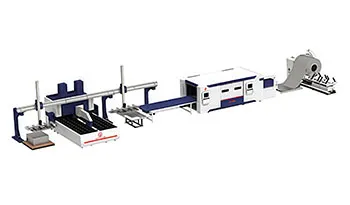
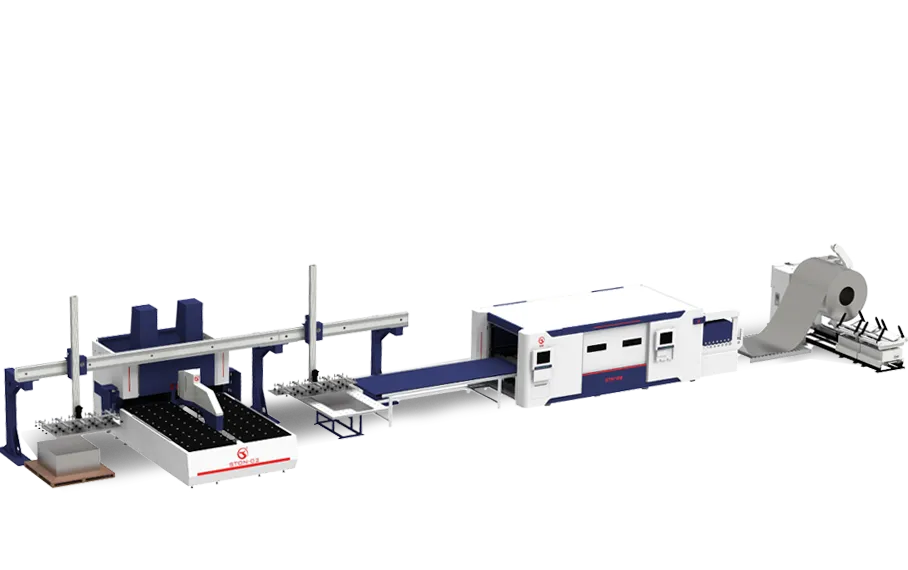
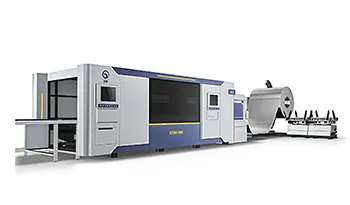
The fully automatic production line for laser cutting and bending includes coil rack, leveling device, laser machine, material receiving platform, panel bender(or turret punch press),centering platform and truss(or robot arm).Customized,the parameters of the production line are determined according to the customer’s steel coil size, weight, plate material and thickness as well as product drawings.
Automatic loading systems can include sheet stacks, suction lifters, destackers and sheet alignment devices. They separate and position each sheet accurately on the infeed side, protecting the surface and ensuring smooth entry into the first processing station.
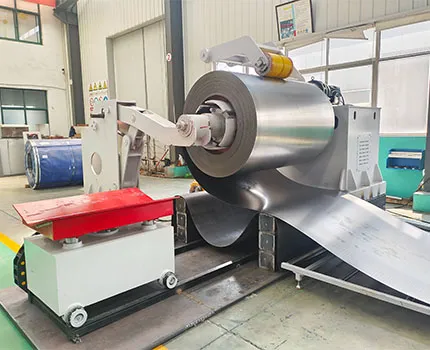
According to your product requirements, the line can be equipped with a CNC turret punch press, fiber laser cutting unit, or a punch & laser combined machine. This section completes all required holes, slots and profiles, preparing blanks for downstream bending and forming processes.
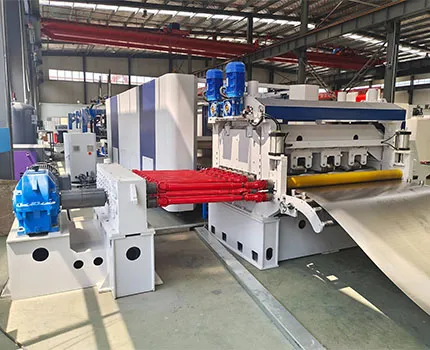
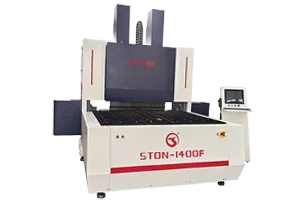
The bending section usually consists of CNC panel benders or press brakes, automatically receiving punched or cut blanks. Coordinated positioning ensures that bends match the previous features, forming cabinet doors, side panels, drawers and other components efficiently.
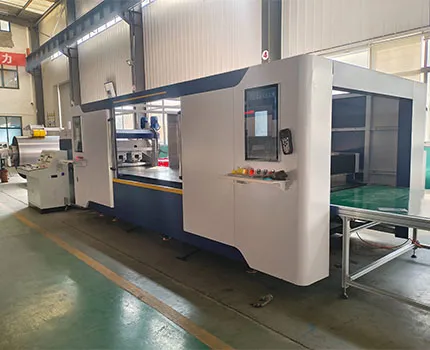
Flanging machines and forming stations handle special edges, hems and reinforcement features required for doors, drawers and structural parts. Integrating them into the line guarantees consistent flange height and shape, reducing manual operations.
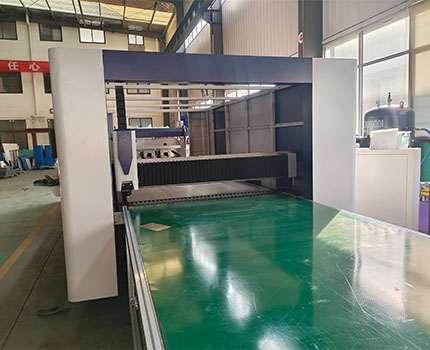
Roller conveyors, belt conveyors, lifters and buffer zones coordinate part flow between stations. They balance cycle times, absorb short stops and protect parts from collision, ensuring that each machine runs at optimal efficiency within the whole line.
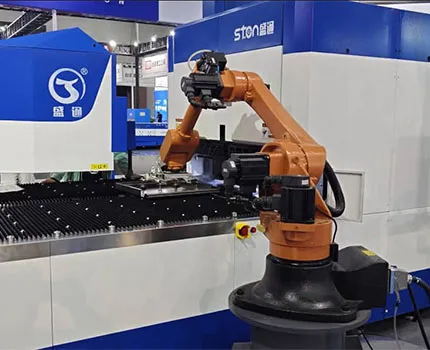
The centralized line control system links all stations and safety devices. Operators can start, stop and monitor the entire line from one interface. Safety fences, light curtains, emergency stops and interlocks provide protection for personnel while maintaining high availability of the equipment.
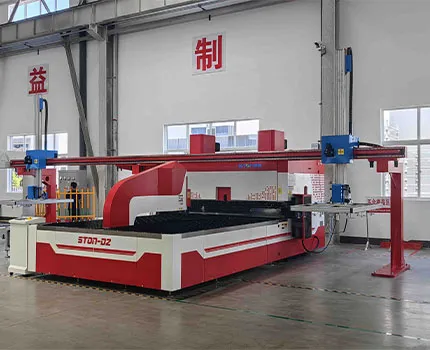
The bent sheet metal parts are transferred by the robot to the manipulator welding forming station. The manipulator welding forming equipment is equipped with a high-precision welding system and a visual tracking system, which can automatically select the appropriate welding process (such as argon arc welding, spot welding, etc.) and welding parameters according to the welding requirements of the sheet metal parts. During the welding process, the visual tracking system monitors the weld position in real time and guides the manipulator to accurately complete the welding operation, ensuring that the weld is uniform and firm, and the welding quality is stable and reliable.
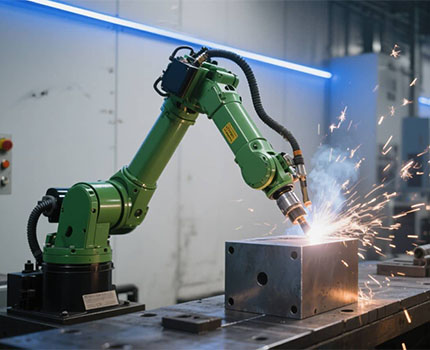
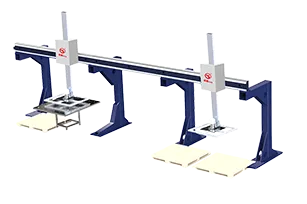
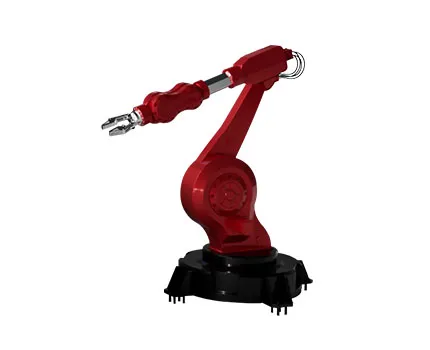
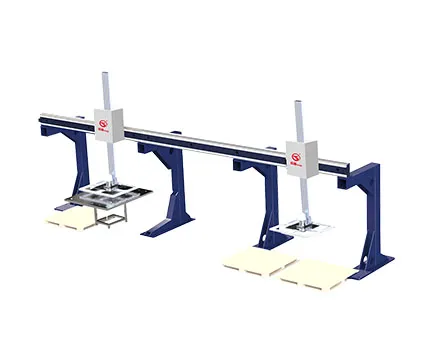
There are two forms of automated loading and unloading: truss and robotic arm
(1)The robotic arm grabs the sheet metal parts that have been processed by leveling, laser cutting and other preliminary processes from the processing area with its flexible joints and precise positioning capabilities. The grabbing device at the end of the robotic arm can be adaptively adjusted according to the shape and size of the sheet metal parts to ensure a smooth and reliable grabbing process and avoid damage to the workpiece. After grabbing, the robotic arm quickly transfers the sheet metal parts to the starting position of the truss conveyor track.
(2)The truss automation system offers a cost-effective solution for stable, high-load transfer of sheet metal components. Powered by servo drives, it ensures fast and precise positioning along predefined tracks—enhancing the speed and reliability of the overall sheet metal production line.
Creemos en el establecimiento de relaciones sólidas y transparentes con nuestros clientes. Por eso invitamos a nuestros socios a visitar nuestras vanguardistas instalaciones de fabricación y ver de cerca nuestro proceso de producción.
 Anthony
Gerente de Adquisiciones, Climatización
Fábrica de componentes (Alemania)
 Jeffrey
Propietario de una fábrica de utensilios de cocina de acero inoxidable
Fabricante (EE. UU.)
 Jared
Jared– Director de Operaciones, Cuadros Eléctricos
Fábrica (Canadá)
Nuestras máquinas son adecuadas para chapas comunes como acero inoxidable, acero al carbono, aleación de aluminio y chapa galvanizada. El rango de espesor es de 0,2 mm-6 mm, satisfaciendo las necesidades de diversas industrias, incluyendo electrodomésticos, hardware y armarios. También admite procesos personalizados asimétricos y complejos.
Sí, ofrecemos un servicio integral: “instalación in situ + puesta en marcha + formación personalizada”. Ingenieros profesionales visitarán las instalaciones del cliente para completar el montaje de la línea de producción y la puesta en marcha de la integración de los equipos para garantizar que la línea alcance la capacidad diseñada. También proporcionamos formación teórica y práctica para los operarios (6-8 días), que abarca el funcionamiento de los equipos, el mantenimiento rutinario y la resolución de problemas. Tras la formación, proporcionamos un manual del operador y tutoriales en vídeo.
Disponemos de servicios personalizados. Optimizamos la estructura de la máquina en función del espacio del taller del cliente, la capacidad de carga y los requisitos de procesamiento. Al tiempo que garantizamos la precisión del procesamiento, adaptamos la máquina a las condiciones de suministro eléctrico y de aire existentes en el taller para garantizar una instalación sin problemas y un funcionamiento eficaz.
Hemos establecido un mecanismo de respuesta posventa global de 24 horas: Los clientes pueden enviar informes de solución de problemas por teléfono, correo electrónico o servicio de atención al cliente en línea, y se les proporcionará una solución preliminar en el plazo de 1 hora. Si es necesaria una depuración remota, un ingeniero proporcionará orientación por vídeo en un plazo de 2 horas. Para las reparaciones de hardware, los clientes nacionales recibirán una visita en 48 horas, mientras que los clientes extranjeros pueden utilizar los centros de servicio autorizados o la entrega acelerada de piezas (con instrucciones de instalación) para garantizar una resolución rápida.
Todos nuestros equipos estándar (centros de plegado flexibles, punzonadoras de torreta CNC, plegadoras y punzonadoras y cizallas) tienen un año de garantía gratuita. Para algunos productos con sistemas de mayor complejidad, el periodo de garantía puede ampliarse a 18 meses. La garantía cubre la reparación y sustitución de problemas de calidad de los componentes principales (como servomotores, sistemas CNC y carriles guía), así como inspecciones gratuitas in situ durante el periodo de garantía. Tenga en cuenta que los fallos del equipo causados por errores humanos, fuerza mayor (como inundaciones y terremotos) o incumplimiento del manual de mantenimiento no están cubiertos por la garantía gratuita, pero existen servicios de reparación de pago.
Existen garantías ampliadas, con coberturas que van de 1 a 3 años. Estos planes se personalizan en función del tipo de equipo, la frecuencia de uso y las necesidades del cliente. Una ampliación de un año para un solo dispositivo cuesta aproximadamente 3%-5% del precio total, mientras que las ampliaciones masivas para varios dispositivos o líneas de producción totalmente automatizadas ofrecen un descuento de 20%. Durante el periodo de ampliación de la garantía, además de las reparaciones de los componentes principales, los clientes también reciben un servicio anual gratuito de inspección y mantenimiento integral de los equipos para ayudarles a identificar proactivamente posibles fallos y prolongar la vida útil de sus equipos.
Ofrecemos opciones de pago flexibles para satisfacer las necesidades de los clientes nacionales e internacionales: ① Transferencia telegráfica (T/T): 30% prepago, 70% antes de que el equipo salga de fábrica; ② Carta de crédito (L/C): Aceptamos cartas de crédito irrevocables emitidas por el banco asociado del cliente a la vista para garantizar la seguridad de los fondos para ambas partes. Todos los métodos de pago cumplen las prácticas comerciales internacionales y admiten las principales divisas de liquidación, como el dólar estadounidense y el euro.
A sheet metal production line is a fully automated system that integrates uncoiling, leveling, laser cutting, bending, and material handling to process metal sheets or coils into finished parts. Using coil-to-cut automation, the system feeds raw coils through laser cutters and bending centers, delivering high-precision components efficiently and with minimal manual intervention.
Compared to traditional sheet-fed systems, a coil fed sheet metal production line provides:
Continuous processing with fewer material changeovers、Up to 50% increase in throughput、Reduced material waste through optimized nesting、Lower labor costs with automated laser cutting and bending、Enhanced precision for high-volume production
Yes, our coil-to-cut automation systems are fully customizable. The configuration is based on your specific coil width, weight, material type (e.g., stainless steel, aluminum, galvanized), and desired part geometries. The line supports various modules like servo feeding, laser cutting automation, and robotic bending stations to meet diverse industrial needs.
Industries that require high-speed, high-precision, and repeatable sheet metal fabrication benefit greatly from these lines. Common applications
By integrating automated laser cutting into the sheet metal production line, manufacturers benefit from precise, high-speed processing with minimal human error. The system reads digital designs (DXF/DWG) directly, auto-nests parts for optimal material usage, and enables uninterrupted coil fed laser cutting, significantly reducing cycle times and increasing output quality across applications like HVAC, cabinets, and electrical enclosures.
Typical applications include electrical cabinets, switchgear, lockers, metal furniture, doors, ventilation ducts, kitchen equipment and other products with repetitive panel parts.
Yes. In many projects we start by integrating existing punching or laser machines with loading and unloading, and then add bending and forming stations later. We will design a roadmap based on your budget and future plans.
Our engineers study your drawings, material types, batch sizes, takt time and workshop layout. Based on this information, we propose a process route and choose suitable machines, transfer systems and automation levels.
Tanto si está actualizando una línea existente como si está iniciando un nuevo proyecto, STON personalizará una solución CNC para su producción.