Somos responsables de la construcción-----somos responsables de la fabricación-----somos responsables de la formación

Elegir la prensa punzonadora equivocada puede ralentizar la producción, desperdiciar costos de herramental y reducir la consistencia de las piezas. Esta guía ayuda a los compradores a elegir con más confianza.
La prensa punzonadora adecuada depende del tamaño de su lámina, el grosor del material, el patrón de agujeros, las necesidades de conformado, el volumen de producción, el plan de automatización y el soporte del proveedor. Para las fábricas de chapa metálica, una prensa punzonadora CNC de torreta suele ser una opción práctica para el punzonado flexible, el conformado y el procesamiento repetido de agujeros.
Una prensa punzonadora no es solo una máquina de punzonar. Para muchas fábricas de fabricación de chapa metálica, afecta la velocidad de producción, la calidad de las piezas, el costo laboral, la planificación del herramental y la automatización futura. Los compradores no deben elegir solo por el precio de la máquina. Deben comparar las necesidades del proceso, la estructura de la pieza, el tipo de material, la frecuencia de punzonado y el soporte de servicio a largo plazo. Este artículo explica cómo funciona una prensa punzonadora de torreta, qué tipos de prensas punzonadoras están disponibles, cómo se compara el punzonado de torreta con el corte láser, y cómo los compradores B2B pueden elegir la máquina adecuada para la producción real.
Muchos compradores saben que necesitan punzonado de chapa metálica, pero es posible que no sepan qué máquina se ajusta a su proceso. Una prensa punzonadora de torreta resuelve este problema.
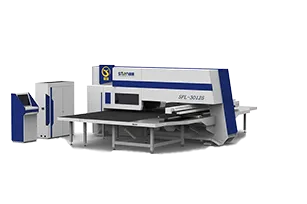
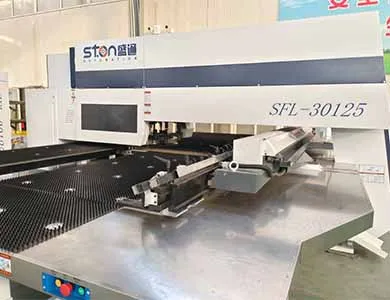
Una punzonadora de torreta es una máquina CNC de punzonado de chapa metálica con una torreta giratoria que alberga múltiples herramientas. Puede perforar agujeros, recortar bordes, formar rejillas de ventilación, estampar patrones y procesar formas repetidas en láminas de metal.

Una punzonadora de torreta utiliza un sistema de herramientas de torreta para alojar diferentes punzones y matrices. El sistema CNC controla el movimiento de la lámina y la selección de herramientas. La máquina desplaza la lámina hasta la posición correcta, selecciona la herramienta adecuada y completa el punzonado o el formado según el programa.
Para los compradores B2B, esta estructura aporta un valor claro. Una sola máquina puede completar muchos trabajos de punzonado sin cambiar toda la configuración de producción. Una fábrica puede usar herramientas redondas, cuadradas, rectangulares, para rejillas de ventilación, para estampado y para formado en distintas piezas de chapa metálica. Esto ayuda a los talleres de chapa metálica a gestionar diferentes pedidos con mayor flexibilidad.
Una punzonadora de torreta se utiliza a menudo para gabinetes eléctricos, cajas de control, paneles de conmutación, mobiliario metálico, paneles de HVAC, piezas de ventilación, cubiertas de maquinaria, gabinetes de herramientas y envolventes industriales. Estos productos suelen requerir muchos agujeros, ranuras, rejillas de ventilación, formas pequeñas y patrones repetidos. Una máquina de punzonado de torreta CNC puede procesar estas características con una repetibilidad estable.
Para los equipos de producción, el principal beneficio no es solo la velocidad. El mayor valor está en el control del proceso. Un proceso de punzonado programado puede reducir el marcado manual, la perforación manual y los ajustes repetidos del operador. También puede mejorar la consistencia de las piezas a lo largo de la producción por lotes. Esto es importante para las fábricas que necesitan una calidad de ensamblaje estable.
A turret punch press can also support automation when the buyer needs higher output. It can work with automatic loading and unloading systems, sorting tables, and other sheet metal automation equipment. If a buyer plans to build a more complete production line, the turret punch press should be selected with future integration in mind.
Some buyers compare punch presses only by price, but different punch press types serve different production needs. A wrong type can limit future production.
Common punch press types include mechanical punch presses, hydraulic punch presses, CNC punch presses, servo punch presses, and turret punch presses. Each type has different strengths for speed, force, flexibility, tooling, and automation.

A buyer should understand the main punch press types before making a sourcing decision. A punch press is not one fixed machine category. Different machine structures match different production logic.
| Punch Press Type | Main Feature |
|---|---|
| Mechanical Punch Press | High-speed repeated punching |
| Hydraulic Punch Press | Strong punching force |
| CNC Punch Press | Program-controlled punching |
| CNC Turret Punch Press | Multi-tool punching and forming |
| Servo Punch Press | Better control and efficiency |
| Máquina combinada de punzonado y corte por láser | Punching plus laser cutting |
A mechanical punch press can be useful when a factory makes the same part in large volume. It is fast for repeated work, but it is less flexible for many product types. A hydraulic punch press can provide strong force, but buyers should check speed, control, maintenance, and energy use based on their actual process.
A CNC punch press is more flexible because the program controls sheet positioning and punching paths. It is suitable for sheet metal manufacturers that process different parts. A CNC turret punch press goes further because the turret holds many tools. This allows the machine to process different hole shapes and forming features in one programmed job.
A servo turret punch press can be useful when the buyer needs better stroke control, lower noise in some processes, and more stable operation. A punch laser combined machine is useful when the buyer needs both forming and flexible cutting. For example, turret punching can handle louvers, embossing, and repeated holes, while laser cutting can handle complex outer contours.
For overseas B2B buyers, the best type depends on the production mix. A distributor may need a machine that fits many customer industries. A factory owner may need one machine for a clear product line. A cabinet manufacturer may need a turret punch press with forming tools. An automation project buyer may need a machine that can connect with loading, unloading, or downstream bending equipment.
Buyers often compare laser cutting and turret punching, but these two processes are not direct replacements in every case. Each process has its own role.
Laser cutting is better for flexible contour cutting and complex profiles. Turret punching is better for repeated holes, louvers, embossing, forming features, and cost-efficient punching patterns in sheet metal production.

Laser cutting and turret punching both belong to sheet metal fabrication, but they solve different problems. A CNC laser cutting machine uses a laser beam to cut metal sheets. It is strong in flexible shapes, smooth contours, and no physical punching tool requirement. A turret punch press uses mechanical punching tools to create holes, forms, and repeated features.
The difference becomes clear when buyers look at the part structure. If the part has many round holes, ventilation slots, louvers, embossed marks, or formed features, a turret punch press can be very practical. It can create these shapes with suitable tooling and stable repeatability. If the part has complex outer profiles, many changing shapes, or small-batch cutting without tooling, a laser cutting machine for metal may be more suitable.
| Comparison Item | Punzonadora de torreta | CNC Laser Cutting Machine |
|---|---|---|
| Main Process | Punching and forming | Cutting and profiling |
| Best For | Holes, louvers, embossing, repeated patterns | Complex contours and flexible shapes |
| Tooling | Requires punch tools | No punching tool required |
| Forming Ability | Good for forming features | Mainly cutting |
| Production Logic | Strong for repeated sheet metal features | Strong for changing cutting profiles |
| Typical Use | Cabinets, HVAC panels, metal furniture | Custom metal parts, panels, profiles |
Some buyers do not need to choose only one process. A complete sheet metal production line can use both. Corte con láser can process contours, and turret punching can process forms and repeated holes. A punch laser combined machine can also help buyers process different features in one production flow.
For a procurement team, the key question is not “Which machine is better?” The better question is “Which process matches our parts?” If your parts need many formed features, turret punching has strong value. If your parts change shape often and need flexible cutting, laser cutting may be better. If your production needs both, you should consider an integrated solution.
Some factories still use manual drilling or simple punching tools, but this can create slow production and unstable quality. A punch press improves control.
A punch press improves sheet metal fabrication by increasing punching speed, improving hole consistency, reducing manual work, supporting tooling flexibility, and helping factories process repeated patterns and forming features more efficiently.
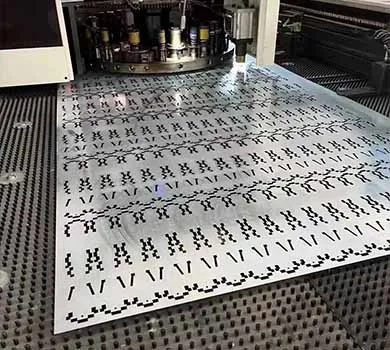
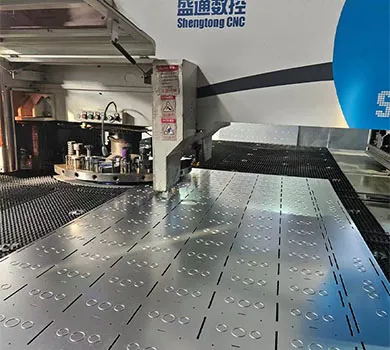
The first benefit of a punch press is stable production efficiency. A programmed punching process can reduce manual layout work and repeated measuring. The machine follows the CNC program and processes holes or forms at the planned position. This helps factories improve repeatability, especially for batch production.
The second benefit is part consistency. Electrical cabinets, switchgear panels, metal furniture, and HVAC panels often need accurate holes and repeated slots. If these features are not consistent, assembly can become slower. The finished product may also have quality problems. A turret punch press can help buyers control hole position, feature shape, and batch repeatability.
The third benefit is tooling flexibility. A turret punch press can hold multiple tools. This allows the machine to process different features without stopping the job for every tool change. For factories with different product types, this flexibility can reduce downtime and improve production flow.
The fourth benefit is forming ability. Laser cutting can cut profiles, but it cannot replace punching tools for many formed features. A punch press can create louvers, embossing, countersinks, knockouts, and other sheet metal forms when the correct tooling is used. This is important for electrical enclosures, ventilation products, cabinets, and industrial panels.
The fifth benefit is automation potential. A punch press can become part of a larger sheet metal automation system. Buyers can add automatic loading, unloading, sorting, or stacking equipment based on production needs. This helps reduce manual handling and improve long-term output.
For B2B buyers, these benefits become stronger when the machine matches real production needs. A punch press should not be selected only because it has many functions. It should be selected because those functions solve the buyer’s daily production problems.
A punch press may look suitable on paper, but the wrong model can create tooling waste, low efficiency, and poor process matching.
To choose the right punch press, buyers should evaluate material type, sheet thickness, part size, hole pattern, forming needs, production volume, automation plan, tooling system, service support, and future production changes.
The first step is to define your product. Buyers should list the sheet metal parts they produce most often. These parts may include cabinet doors, side panels, chassis parts, ventilation panels, metal shelves, machinery covers, or stainless steel panels. The part structure will show whether the machine needs punching, forming, cutting, or a mixed process.
The second step is to check material and thickness. Different materials need different punching force, tooling design, and machine stability. Common sheet metal materials include cold-rolled steel, galvanized steel, stainless steel, aluminum, and pre-painted sheets. Buyers should not only ask whether the machine can process the material. They should also ask whether it can process the material in daily production with stable tool life and acceptable edge quality.
The third step is to study the hole pattern and forming features. If the parts need many repeated holes, slots, louvers, and embossing features, a CNC turret punch press can be a strong option. If the parts need many complex outer contours, laser cutting may also be needed. If the factory needs both punching and cutting, a punch laser combined solution may be worth comparing.
The fourth step is to consider production volume. A low-volume workshop may need flexibility. A high-volume factory may need speed, automatic loading, and stable long-shift operation. A distributor may need a machine that can serve many industries. Each buyer type has different priorities.
The fifth step is to evaluate the supplier. A punch press is not a small tool. Buyers need machine selection support, tooling advice, installation guidance, operator training, maintenance support, and spare parts communication. STON CNC can help overseas buyers compare turret punch presses, laser cutting systems, press brakes, and sheet metal automation options based on material, part size, workshop layout, and production goals.
| Selection Factor | What Buyers Should Check |
|---|---|
| Material | Steel, stainless steel, aluminum, galvanized sheet, or pre-painted sheet |
| Sheet Thickness | Daily working thickness, not only maximum limit |
| Part Size | Maximum sheet size and finished part dimensions |
| Feature Type | Holes, slots, louvers, embossing, forming, or contour cutting |
| Production Volume | Small batch, mixed batch, or large batch |
| Automation Need | Manual loading, automatic loading, unloading, sorting, or stacking |
| Tooling Plan | Standard tools, forming tools, special tools, and replacement cost |
| Supplier Support | Installation, training, troubleshooting, maintenance, and spare parts |
A good punch press choice should reduce process problems, not create new ones. Buyers should send drawings, material details, and production targets before asking for a quote. This allows the supplier to recommend a machine that fits the real production process.
The right punch press should match your parts, materials, volume, tooling needs, and automation plan. STON CNC can support practical machine selection.
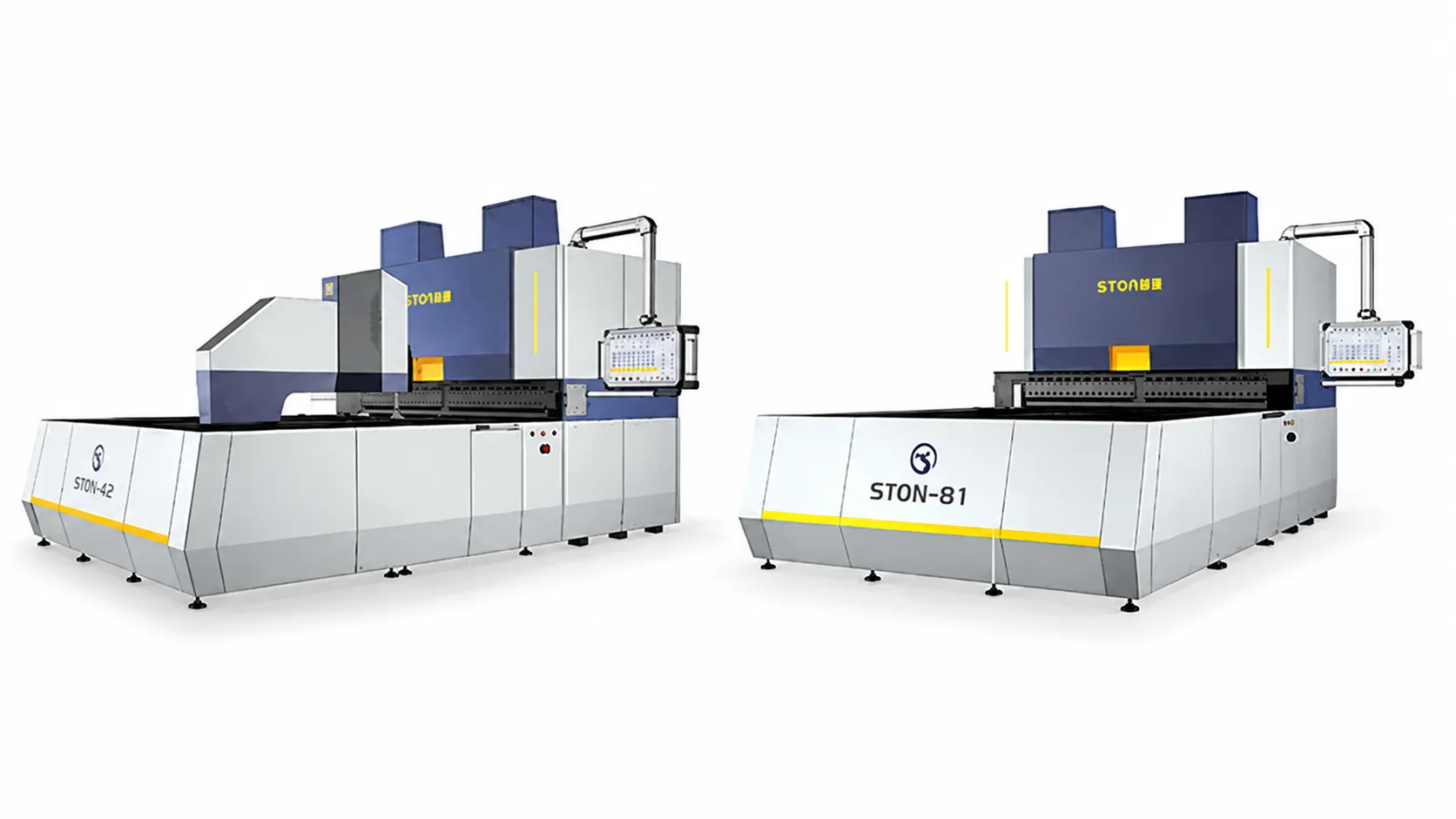
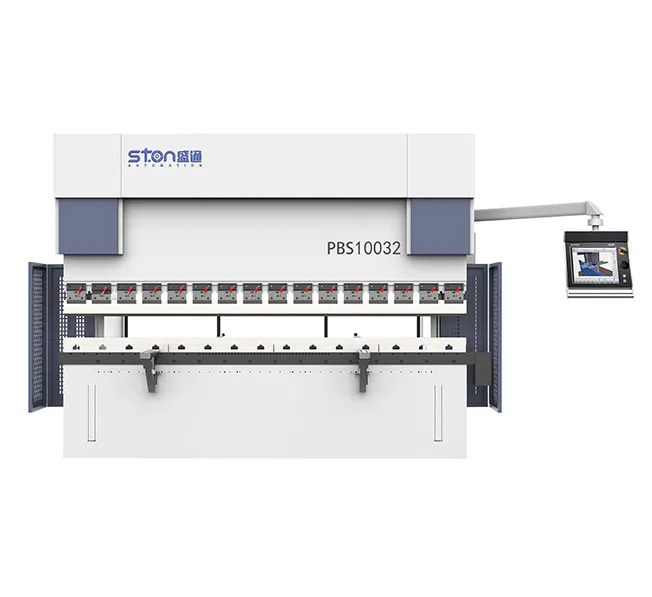
Tanto si está actualizando una línea existente como si está iniciando un nuevo proyecto, STON personalizará una solución CNC para su producción.