Somos responsables de la construcción-----somos responsables de la fabricación-----somos responsables de la formación

El manejo manual de láminas ralentiza la producción, genera errores y desperdicia valioso tiempo en planta. Cuando las fábricas procesan material en bobina con máquinas separadas, cada transferencia añade costo y riesgo. Una línea de producción automática de bobina a corte ayuda a los fabricantes a conectar la alimentación, nivelación, corte láser, cizallado y apilado en un flujo de trabajo más inteligente.
Una línea de producción automática de bobina a corte procesa bobinas de acero en piezas en bruto precisas mediante alimentación de bobina, nivelación, corte láser, cizallado y apilado. En comparación con los métodos de corte tradicionales, ayuda a las fábricas de lámina metálica a mejorar la precisión, reducir el manejo manual, automatizar el procesamiento de bobinas y aumentar la eficiencia de producción para gabinetes, piezas de HVAC, envolventes, electrodomésticos y componentes metálicos OEM.
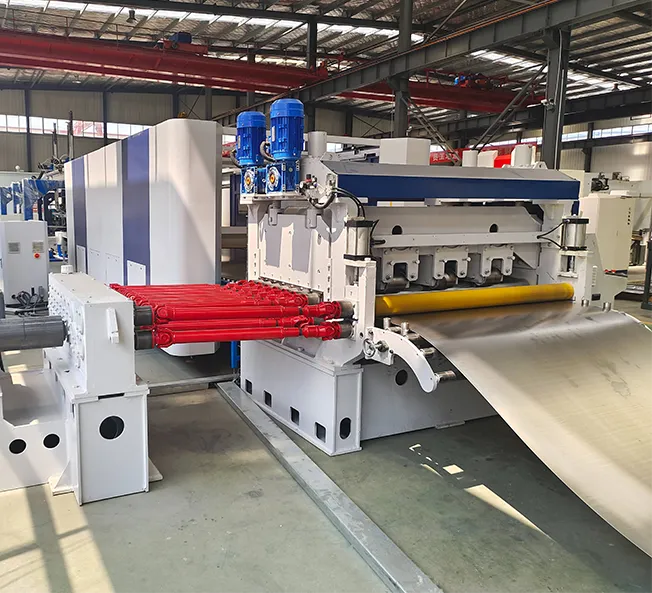
Desenrollado-Nivelado
1. ¿Qué es una línea de producción automática de bobina a corte?
2. ¿Cómo funciona una línea de procesamiento de bobinas desde la alimentación de bobina hasta el apilado de piezas en bruto?
3. ¿Por qué es importante una línea de corte a medida para el procesamiento de bobinas de acero?
4. ¿Cómo mejoran las líneas de corte láser por bobina la precisión y la eficiencia?
5. ¿Qué materiales puede procesar una línea de corte de bobinas?
6. Corte de bobinas vs. corte tradicional: ¿Qué método se adapta a su fábrica?
7. ¿Cuáles son los módulos clave en un sistema de corte láser alimentado por bobina?
8. ¿Qué industrias utilizan equipos automáticos de procesamiento de bobinas metálicas?
9. ¿Cómo puede el procesamiento avanzado de bobinas reducir la mano de obra y el desperdicio?
10. ¿Por qué elegir STON para soluciones personalizadas de líneas de procesamiento de bobinas?
Una línea de producción automática de bobina a corte es un sistema de automatización de chapa metálica que convierte una bobina de acero en piezas planas listas para usar o piezas conformadas. Por lo general, incluye carga de bobina, desbobinado, enderezado de bobina, nivelado, alimentación, corte por láser, cizallado, recepción, clasificación y apilado automático. En pocas palabras, la línea toma la bobina, la aplana, la corta y envía la pieza terminada al siguiente proceso.
Para muchas fábricas, este proceso sustituye el antiguo manejo hoja por hoja. En lugar de cargar placas individuales en una máquina de corte una y otra vez, la fábrica puede procesar el material en bobina de forma continua. Esto significa menos paradas, menos movimiento manual y mejor velocidad de producción. Limpio y sencillo. Muy amigable para la fábrica.
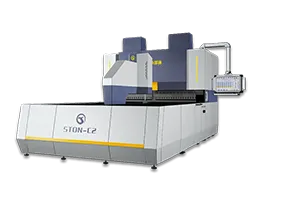
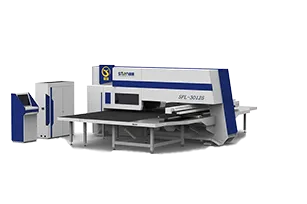
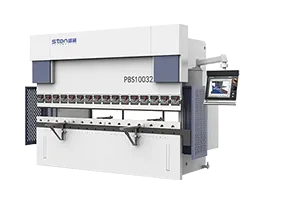
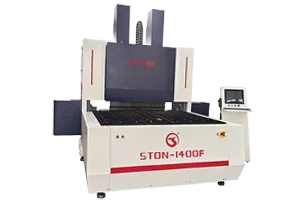
En la fabricación moderna de chapa metálica, un sistema de procesamiento de bobinas a menudo se conecta con una plegadora de panel CNC, una punzonadora de torreta, una plegadora de prensa o un sistema de carga automático. Esto convierte el procesamiento de bobinas de un simple paso de corte en un flujo de trabajo completo de procesamiento de bobinas para piezas metálicas de alto volumen.
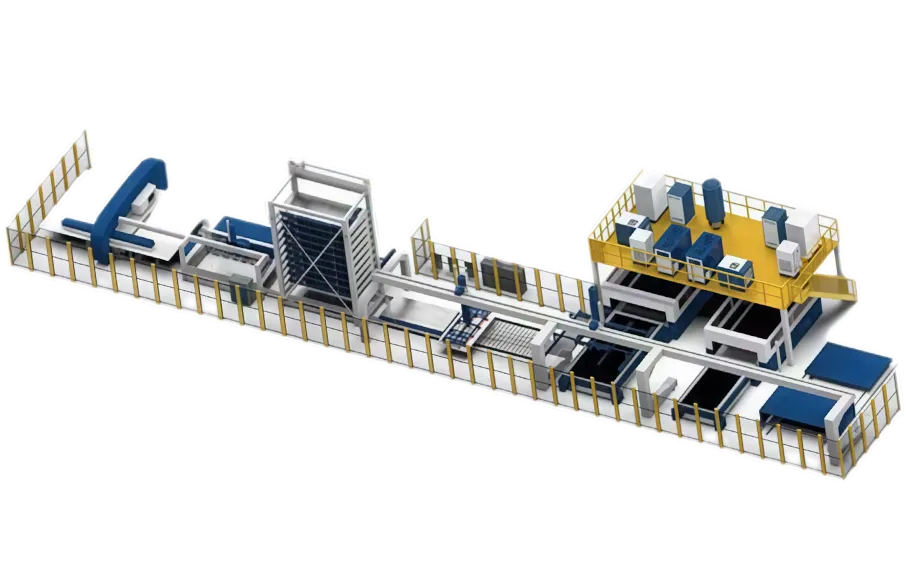
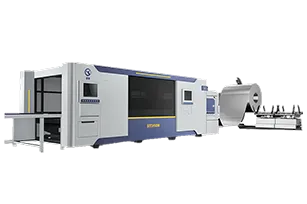
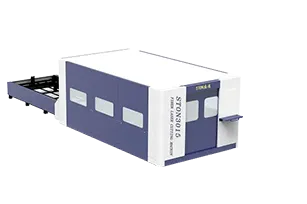
Línea de Producción Automática de Corte y Plegado Láser STON5
Una línea de procesamiento de bobinas típica comienza con un desbobinador o soporte para bobina. La bobina de acero se coloca en el soporte, y el sistema de alimentación de bobina tira de la tira de la bobina hacia adelante. A continuación, la enderezadora elimina la memoria de la bobina y ayuda a que la lámina de metal quede plana. Un buen enderezado es importante porque una pieza plana es más fácil de cortar, punzonar, doblar y ensamblar.
Después del nivelado, la línea de alimentación traslada el material hacia el área de corte. Según el diseño del sistema, la línea puede utilizar una cizalla, un sistema de corte por láser, o ambos. Una máquina láser puede cortar formas, agujeros, ranuras y contornos. Una máquina de cizallado puede realizar cortes rectos cuando la planta solo necesita piezas en bruto estándar. Después del proceso de corte, las piezas se trasladan a mesas de recepción, áreas de clasificación o estaciones de apilado.
STON diseña soluciones automáticas para bobinas con el fin de reducir la manipulación manual. Una línea de bobinas completa puede conectar la alimentación de bobinas, el corte por láser, la clasificación automática y el equipo de plegado bajo un solo sistema de producción. Cuando la línea está bien diseñada, cada paso fluye hacia el siguiente. Sin complicaciones. Solo metal en movimiento con un propósito.
| Paso del proceso | Función principal | Valor para el comprador |
|---|---|---|
| Carga de la bobina | Sostiene la bobina de metal | Reduce la carga repetida de láminas |
| Desenrollando | Libera el material de la bobina | Favorece la producción continua |
| Subida de nivel | Flattens the coil | Improves cutting and bending quality |
| Feeding | Moves the sheet forward | Supports accurate length control |
| Laser Cutting / Shear | Cuts blanks or shapes | Improves precision and efficiency |
| Sorting / Stacking | Organizes finished blanks | Reduces manual work |
A cut to length line is used to cut coils into flat sheets or blanks with accurate length. This is one of the most common coil processing methods in steel service centers, cabinet factories, HVAC plants, and OEM metal processing workshops. The goal is easy to understand: cut the coil into the right size before the next operation.
Traditional cutting may require workers to move plates between different machines. That takes time and space. It also increases the chance of surface scratches, wrong sizes, or stacking mistakes. A coil cut to length line improves this by combining feeding, leveling, measuring, cutting, and stacking into one controlled process.
For factories that process steel coil every day, accuracy matters. A small length error may affect bending, welding, or assembly. When the blank size is stable, the whole sheet metal manufacturing process becomes smoother. That is why a high precision cut to length line is not only a cutting tool. It is a foundation for better production quality.
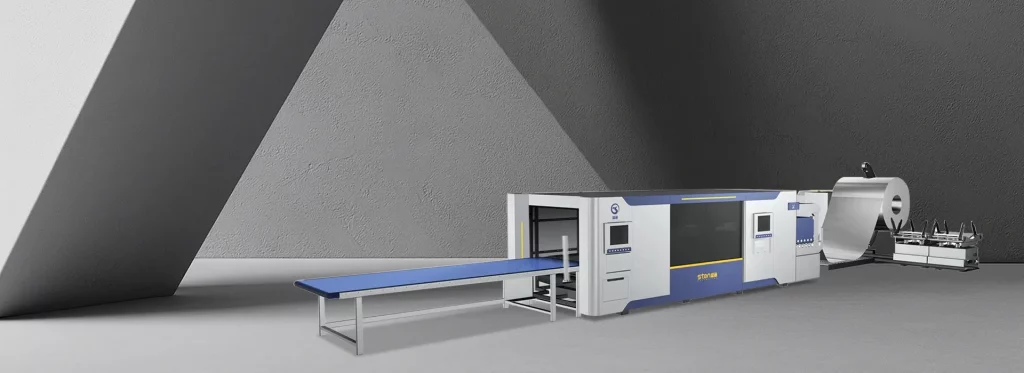
Línea de producción automática
Laser blanking lines bring more flexibility to coil processing. A standard shear is excellent for straight cuts, but laser cutting can create more complex blank shapes. It can cut holes, curves, openings, and part contours directly from coil material. This helps factories reduce secondary processing and shorten the production path.
A coil fed laser blanking system combines coil feeding with fiber laser cutting. The coil is leveled and fed into the laser cutting area, where the blank shape is cut according to a program. This method is useful for manufacturers that produce different metal parts from coil material but still need high speed and repeatable quality.
Laser blanking also helps reduce tooling limitations. When a product changes, the factory may only need to update the cutting program. This is helpful for appliance plants, cabinet factories, metal furniture producers, and OEM manufacturers that deal with many part styles.
For factories that need both speed and flexibility, coil laser cutting can be a smart upgrade from traditional cutting methods.
Una línea de corte de bobinas puede procesar diferentes materiales en bobina según su configuración, capacidad de nivelado, potencia del láser y rango de espesor. Los materiales más comunes incluyen acero al carbono, acero suave, acero galvanizado, acero inoxidable, aluminio, acero prepintado y algunos materiales de acero aleado. El rango exacto de procesamiento siempre debe coincidir con los planos del cliente y los objetivos de producción.
En muchas fábricas de chapa metálica, el rango de espesor de bobina más común es de aproximadamente 0.5–2.0 mm para líneas automáticas de procesamiento de bobinas. El acero inoxidable puede requerir una atención especial porque es más duro y puede resultar más exigente durante el nivelado y el corte con láser de fibra. Un nivelador, sistema de alimentación y máquina de corte láser adecuados ayudan a mantener la pieza plana y precisa.
El ancho de las bobinas también es importante. Una línea debe coincidir con el tamaño de bobina del cliente, el espacio del taller, la capacidad de carga, el suministro eléctrico y el proceso posterior. STON puede personalizar la línea de producción según el’tipo de bobina metálica del cliente, el ancho de la bobina, el peso de la bobina, el espesor de la lámina y los planos del producto.
| Material | Aplicaciones comunes | Nota de procesamiento |
|---|---|---|
| Acero al carbono | Gabinetes, puertas, estantes | Stable and widely used |
| Mild Steel | General metal parts | Easy to form and cut |
| Galvanized Steel | HVAC, enclosures | Surface protection matters |
| Stainless Steel | Kitchenware, medical, lab equipment | Requires stable leveling and cutting |
| Pre-painted Steel | Appliance and decorative panels | Surface protection is important |
| Aluminio | Lightweight panels | Needs suitable feeding and support |
A good automatic metal coil line should protect the material surface, keep the sheet flat, and cut each blank with stable accuracy.
Coil cutting and traditional cutting both have value. The right choice depends on your product volume, material flow, part design, and labor cost. Traditional cutting can work well for low-volume jobs, simple parts, or shops that already use separate plate storage and cutting stations. It is flexible, but it can also be slow.
Automatic coil cutting is better when the factory has repeated production, large order volumes, or a need to automate material flow. The coil moves through the line continuously. Workers do not need to lift, move, and reload sheets all day. That reduces labor pressure and improves production efficiency.
A factory producing electrical cabinets, HVAC panels, elevator parts, or metal furniture often benefits from coil processing because many parts repeat. Once the coil material is fed, leveled, and cut, the blank can move toward punching, bending, flanging, or stacking.
| Artículo | Traditional Cutting | Automatic Coil Cutting |
|---|---|---|
| Material Handling | More manual movement | Continuous coil feeding |
| Labor Use | Higher | Lower |
| Changeover | Flexible but manual | Program-based |
| Output | Limited by handling speed | Better for batch production |
| Surface Risk | More handling scratches | Less manual contact |
| Best For | Low-volume work | High-volume and repeatable parts |
If your team spends too much time moving sheets, your factory may be ready for a coil line. Tiny bottlenecks become expensive when they repeat every day.
A coil fed laser blanking system usually includes several core modules. Each module affects the final blank quality. The decoiler holds and releases the coil. The straightener feeder coil module helps remove curve and wave from the coil strip. The leveling machine improves flatness. The feeding unit controls length and position. The fiber laser cutting machine cuts the required shape. The stacking unit organizes finished blanks.
In advanced coil processing, these modules should work together under one control system. When the line systems are connected well, the operator can manage production with fewer manual steps. The result is a highly automated workflow that supports efficient production and better consistency.
For some factories, the system may also include a slitting line or slitting machine before blanking. This is useful when wide coils need to be divided into narrower strips. For other factories, the line may connect directly to bending or punching equipment, such as a panel bender or turret punch press.
Common modules include:
This complete coil processing approach helps the factory process coil material from raw coil to usable blank with less manual interruption.
Automatic coil processing equipment is useful for industries that produce many similar sheet metal parts. Electrical cabinet manufacturers use coil lines to make cabinet panels, mounting plates, doors, and switchgear parts. HVAC ducting producers use them for ventilation panels, duct sheets, and air purification equipment.
Metal furniture and racking plants also benefit from coil-fed processing. They need repeatable blanks for shelves, cabinets, frames, drawers, and support panels. Appliance and kitchenware plants use the line for stainless steel or pre-painted sheet parts. Telecom and power enclosure makers use it for server racks, control boxes, and power cabinet panels.
Steel service centers may use coil processing equipment to supply cut blanks to downstream factories. For these service centers, speed, precision, and stack quality matter. A clean stack means easier delivery and fewer complaints.
| Industria | Typical Products |
|---|---|
| Electrical Cabinet | Switchgear panels, control cabinet blanks |
| HVAC | Duct panels, ventilation parts |
| Metal Furniture | Office cabinets, shelves, drawers |
| Appliance and Kitchenware | Stainless-steel panels, covers |
| Telecom and Power | Server racks, power enclosures |
| Elevator and Building Materials | Elevator panels, construction sheets |
| OEM Sheet Metal Factories | Custom blanks and components |
| Steel Service Centers | Cut-to-size blanks for customers |
For these users, the production goal is often the same: faster flow, fewer errors, and stable blank quality.
Advanced coil processing reduces labor by removing repeated manual sheet loading. In a traditional process, workers may need to lift sheets, carry them to a cutting machine, align each sheet, remove the finished part, and stack it again. It is slow. It is tiring. And yes, people make mistakes when the work is repetitive.
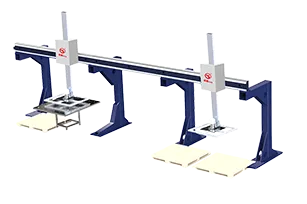
A fully automatic coil line can automate coil feeding, leveling, laser cutting, blank sorting, and automatic stacking. This reduces operator requirements and improves productivity. It also helps protect the material surface because the sheet is not moved by hand again and again.
Waste control also improves. A coil laser system can use better nesting and program control. A stable feed length reduces wrong cuts. A flat blank reduces later bending errors. Together, these small gains support lower total cost of ownership.
How automation creates value:
In short, a better coil processing line does not only cut metal. It improves the whole production rhythm.
STON is a Sheet-Metal Automation & CNC Fabrication Equipment Manufacturer offering OEM/ODM and factory-direct solutions for global customers. We build equipment for sheet-metal job shops, electrical and filing cabinet manufacturers, HVAC ducting producers, appliance plants, telecom and power enclosure makers, EV charging enclosure manufacturers, metal furniture factories, distributors, importers, and industrial automation partners.
When we discuss a coil processing project, we first study the customer’s product. What coil material do you use? What is the thickness range? What coil widths do you need? Do you need straight cuts, laser blanking, punching, bending, or flanging? How many parts must the line produce each shift? What workshop space, power supply, climate conditions, and local standards should the line meet?
STON can customize coil line systems based on real production needs. Our solutions may include automatic feeding, leveling, coil laser cutting, shearing, sorting, stacking, panel bending, turret punching, and robotic handling. We also support installation, commissioning, operator training, spare parts, and after-sales service.
As a factory-direct manufacturer, STON helps buyers turn a coil processing idea into a practical production system.
Imagine an electrical cabinet factory that cuts flat sheets manually before bending and assembly. Workers load sheets one by one. Some blanks have scratches. Some sheets are not flat enough. Production depends on operator speed. When orders increase, delivery becomes stressful.
The factory upgrades to an automatic coil-to-cut production line. The steel coil enters the line, gets leveled, moves into fiber laser cutting, becomes accurate blanks, and then stacks automatically. After that, the blanks move to panel bending or press brake bending.
The result is a smoother workflow. The factory reduces manual handling, improves blank accuracy, and increases production speed. Operators spend less time moving sheets and more time managing quality. That is a real upgrade. Not flashy. Just useful.
An automatic coil-to-cut production line is a strong choice when your factory processes repeated sheet metal parts from coil material. It helps automate coil processing, improve blank accuracy, reduce manual handling, and support high-volume production.
If your products include cabinets, HVAC panels, metal furniture, enclosures, elevator panels, kitchen equipment, or OEM sheet metal components, a coil-fed laser or cut to length line may help your factory work faster and cleaner.
STON can help you evaluate the best solution based on your coil material, thickness range, blank size, factory layout, and production goals. Whether you need a simple coil cutting machine, a coil fed laser cutting system, or a complete coil processing production line, our team can support your project from design to commissioning.
Contact STON to discuss your automatic coil-to-cut production line and build a factory-direct sheet metal automation solution for your business.
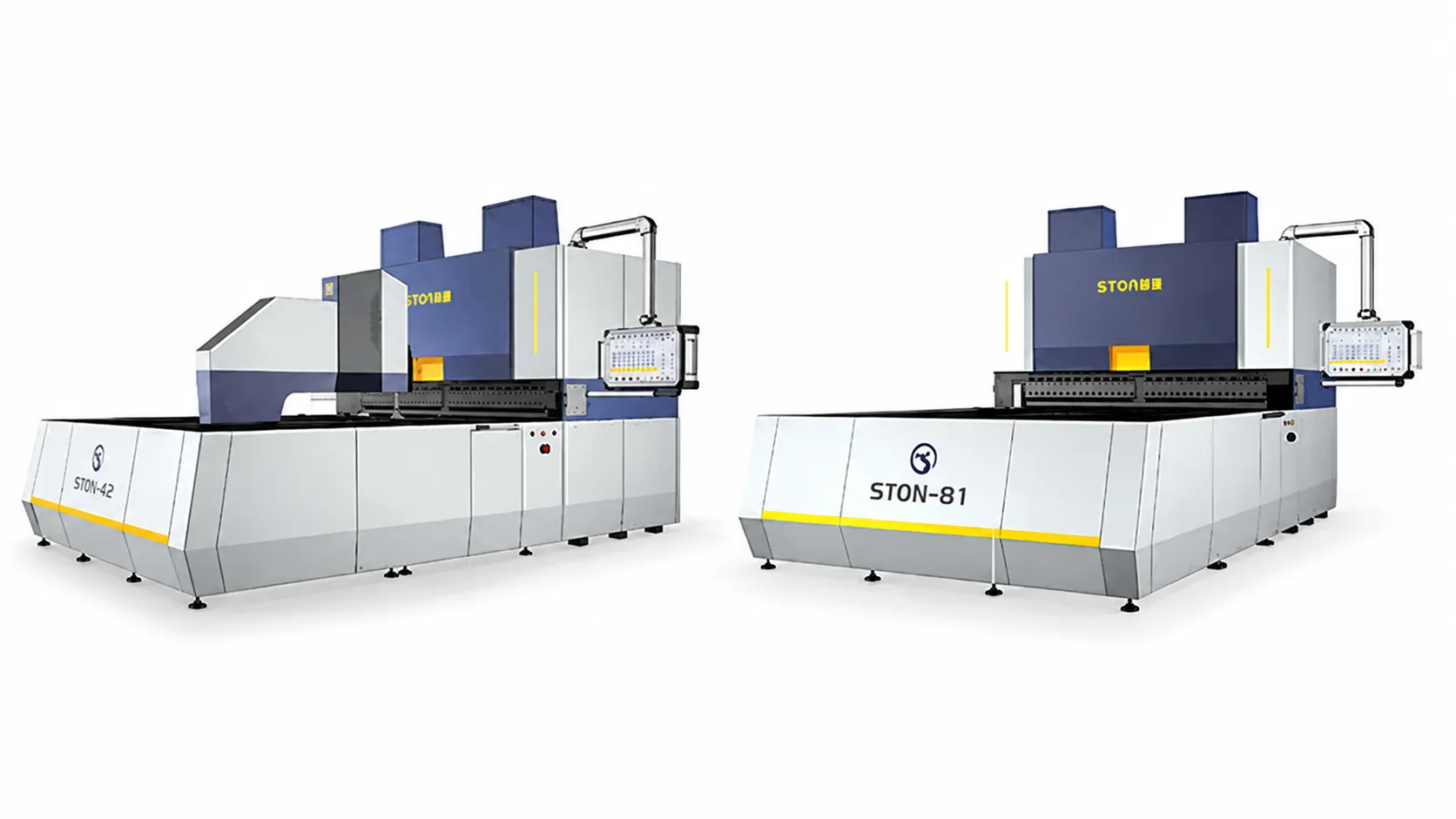
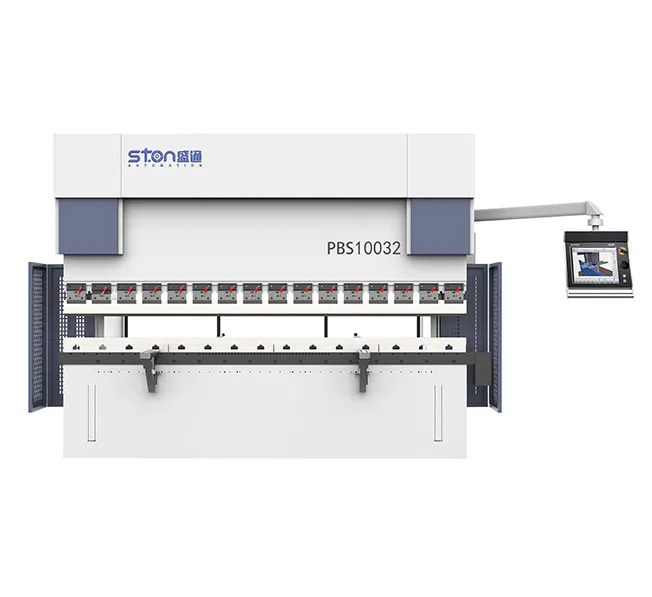
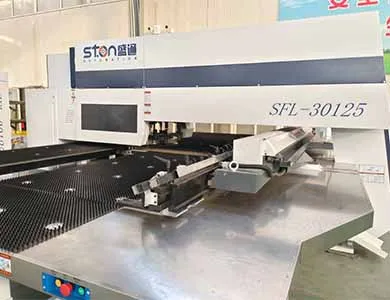
Tanto si está actualizando una línea existente como si está iniciando un nuevo proyecto, STON personalizará una solución CNC para su producción.