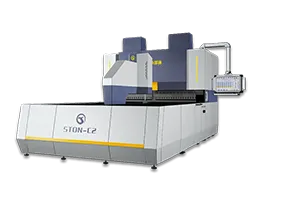
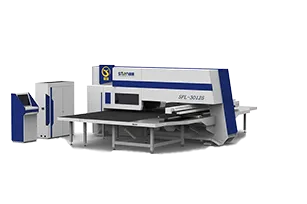
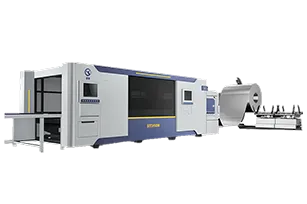
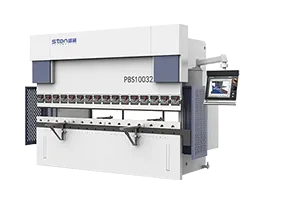
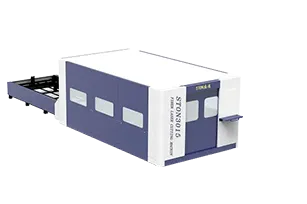
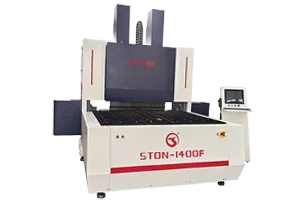
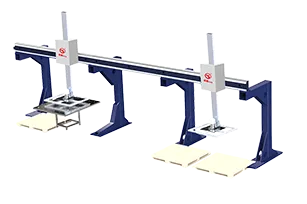
Somos responsables de la construcción-----somos responsables de la fabricación-----somos responsables de la formación

Elegir el espesor máximo incorrecto de la plegadora de paneles puede provocar piezas agrietadas, dobleces débiles o sobrecarga de la máquina. Muchos compradores solo preguntan sobre el espesor de la chapa metálica, pero la capacidad real de plegado depende del tipo de material, el radio de plegado, la longitud de plegado y el herramental. Esta guía le ayuda a elegir la máquina adecuada de forma segura.
A plegadora de paneles normalmente puede plegar chapa metálica delgada a mediana. El espesor máximo de plegado depende del tipo de material, la estructura de la máquina, el ángulo de plegado, el radio de plegado, la longitud de plegado y el herramental. Para muchas plegadoras de paneles, el acero inoxidable suele ser más delgado que el acero laminado en frío o el aluminio porque los materiales de mayor resistencia necesitan más fuerza de plegado.
El espesor máximo de plegado significa la chapa metálica más gruesa que una máquina plegadora puede conformar de manera segura y precisa bajo condiciones especificadas. No se trata solo de si la máquina puede realizar un doblez. También significa si la máquina puede plegar la pieza repetidamente, con ángulo estable, carga de herramienta segura y calidad de plegado aceptable.
Para una plegadora de paneles, el espesor generalmente se muestra por tipo de material. Por ejemplo, una máquina puede plegar acero laminado en frío hasta un valor, acero inoxidable hasta un valor menor y aluminio hasta un valor mayor. Esto sucede porque diferentes materiales necesitan diferente fuerza de plegado.
Los compradores industriales deben leer los datos de espesor con cuidado. Una plegadora de paneles puede ser capaz de plegar una chapa fría de 2.0mm, pero eso no significa automáticamente que pueda plegar acero inoxidable de 2.0mm con el mismo ángulo de plegado, radio y longitud de plegado. La resistencia del material importa. Mucho.

Muchos compradores preguntan: “¿Cuál es la lámina de metal más gruesa que una plegadora de paneles puede plegar?” La respuesta honesta es: depende de la condición completa de plegado. El espesor es solo una parte de la historia.
Una plegadora de paneles debe considerar la lámina de metal, el radio de plegado, el ángulo de plegado, la herramienta, la longitud de plegado y las propiedades del material. Si el metal es más resistente, la máquina necesita más fuerza. Si el radio de plegado es pequeño, la fuerza de plegado requerida aumenta. Si la línea de plegado es larga, la carga también aumenta.
Aquí hay una vista simple:
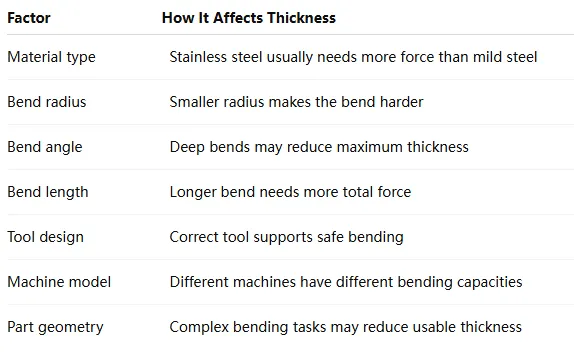
So, the real question is not only “maximum thickness.” The better question is: Can this panel bender bend my actual part, material, and drawing?
Material type is one of the biggest factors in sheet metal bending. Mild steel, stainless steel, aluminum, galvanized sheet, and cold-rolled steel all behave differently. They do not need the same bending force.
Stainless steel has higher strength and more springback than many common steels. This means it is often more difficult to bend. Aluminum is usually easier to bend, but it can scratch more easily. Mild steel and cold-rolled steel are common in cabinets, covers, and general metal fabrication.
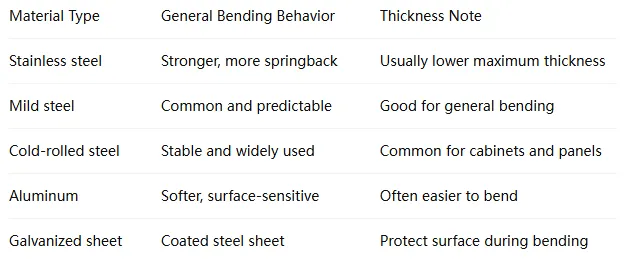
The thickness of the material must match the machine’s rated bending capacities. If you need to bend thick stainless steel, do not assume a standard panel bender is enough. Send your drawings and material grade to the supplier first.

El radio de doblado es la curva interior del doblez. Un radio de doblado interior pequeño hace que el metal se doble de forma pronunciada. Esto puede verse limpio, pero crea más tensión. Un radio mayor distribuye la tensión y puede facilitar el doblado.
Si el radio de doblado es demasiado pequeño para el espesor, el metal puede agrietarse. Esto es especialmente importante para el acero inoxidable y metales de mayor resistencia. El radio de doblado correcto debe corresponder al espesor del material, el tipo de material y el diseño de la herramienta.
El ángulo de doblado también importa. Un doblez simple de 90 grados puede ser más fácil que un ángulo más profundo o más cerrado, dependiendo de la pieza. Cuando el ángulo de doblado se vuelve más exigente, el espesor máximo de doblado puede disminuir.
Una guía simple:
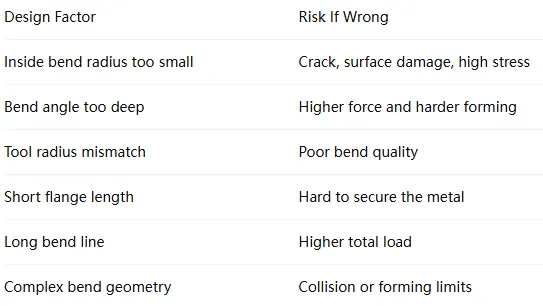
For accurate sheet metal bending, buyers should confirm bend radius and bend angle before final machine selection.
Bend length is the length of the bend line. A short bend is easier than a long bend at the same thickness. That is because the machine must apply force along the full bend length.
For example, bending a 500mm flange is not the same as bending a 3000mm flange. Even if the thickness is the same, the longer part needs more total force and better support. This affects the maximum thickness the machine can handle.
In practical sheet metal fabrication, long panels are common in:
If your factory bends long metal panels every day, you should not check thickness alone. You should check maximum bending length + maximum thickness + material type together.

A prensa plegadora usually has stronger capability for thicker metal, especially hydraulic press brake machines with high tonnage. A panel bender is usually better for thin to medium sheet metal panels, especially repeated parts with multiple edge bends.
A panel bender is designed for speed, precision, and automation in panel bending. It is excellent for cabinets, doors, covers, boxes, and enclosure panels. A press brake is more flexible for thicker plates, special profiles, and general bending operations.
If your factory needs to bend thick metal sheets, a press brake may be the right machine. If your factory needs efficient bending of repeated sheet metal panels, a panel bender may be better. Many factories use both.
Panel benders are designed for sheet metal parts with repeated edge bends. They are very useful when the product is a panel, box, tray, door, cover, or enclosure. These products often need precise bending, stable angles, and clean surfaces.
Common applications include:
These parts usually do not need plate bending of very thick material. Instead, they need fast, accurate, repeated sheet metal bending. This is where the panel bender offers strong value.
For heavy structural plates, large bend radius parts, or very thick metal, buyers should consider a press brake, roll bending machine, or another metal bending machine.
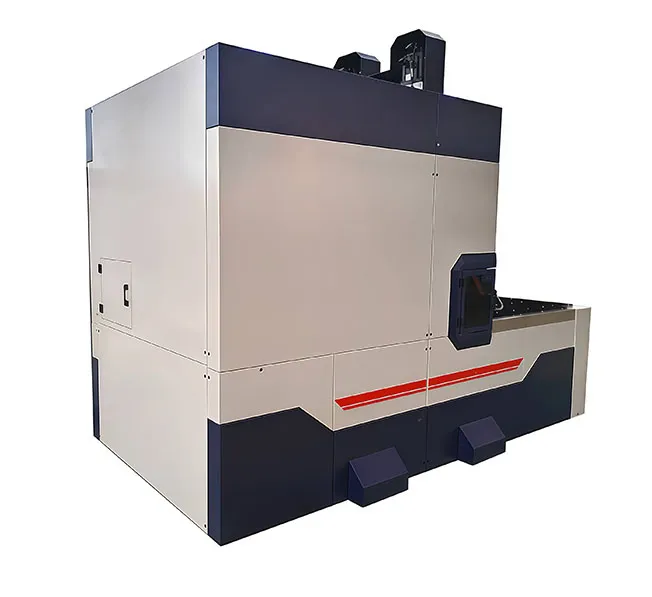
Typical thickness ranges vary by brand and model. In many sheet metal factories, panel benders are used for thin to medium material such as around 0.5mm to 3.0mm, depending on material and machine design. Some models may process thinner sheets, and some specialized equipment may handle different ranges.
Para las soluciones de paneladora STON, el rango práctico depende del modelo y el material. Las referencias comunes incluyen capacidad de chapa delgada desde aproximadamente 0.15mm, con valores máximos como acero inoxidable alrededor de 1.2mm, chapa fría alrededor de 2.0mm y placa de aluminio alrededor de 2.5mm para modelos específicos. Siempre confirme el valor final con planos reales y datos del material.
Una paneladora funciona sujetando la chapa y doblando su borde. La máquina no forma la pieza como una prensa plegadora tradicional con punzón y matriz. En su lugar, las paneladoras se basan en una mordaza y cuchillas de plegado para doblar el metal.
Un proceso básico de plegado incluye:
This gives the machine precise control over the bending process. It also supports efficient bending for repeated panels. The operator does less manual lifting and the machine provides more stable bending accuracy.
For modern sheet metal factories, this is useful because it reduces human error and supports consistent production.
Bend allowance is the amount of material used in the bend area. When a metal sheet is bent, the outside of the bend stretches and the inside compresses. This changes the flat pattern size.
If bend allowance is wrong, the finished part may be too long or too short. This becomes more important as thickness increases because the bend area becomes larger and the metal behaves more strongly during forming.
Bend allowance affects:
For thicker material, buyers should check bend allowance carefully. The bend sequence, bend radius, and tool setting should match the actual machine. A drawing that looks correct in CAD may still fail if the bending parameters are wrong.
Buyers should check bending capacities with real production data. Do not rely only on a short specification table. A table may show maximum thickness, but your part may have a long bend length, small radius, difficult material, or complex bend geometry.
Before buying, prepare:
This information helps the supplier confirm whether the panel bender is capable of bending your real parts. It also helps prevent wrong investment.
A professional supplier should ask for drawings before recommending the machine. If a supplier only says “yes” without checking details, be careful.
What Mistakes Should Buyers Avoid?
The most common mistake is checking only maximum thickness. This is risky. A machine may handle a certain thickness in one material, but not in another. It may bend short parts, but not long parts. It may form a simple 90-degree bend, but not a complex part with multiple sides.
Avoid these mistakes:
Good equipment selection starts with the part drawing. The machine should match your bending needs, not just the catalog headline.
STON es un fabricante de maquinaria CNC para el procesamiento de chapa con sede en China. Ofrecemos dobladoras de paneles, punzonadoras de torreta, prensas plegadoras, unidades de corte por láser y líneas de producción automatizadas. Ayudamos a los fabricantes de todo el mundo a mejorar la eficiencia en el procesamiento, reducir los costos de mano de obra y construir fábricas más inteligentes.
For buyers asking about maximum bending thickness, STON can review the drawing, material type, thickness, bend radius, bend angle, and production target. Then we can recommend a panel bender, press brake, or combined sheet metal automation solution.
Enlaces internos útiles de STON:
STON’s main overseas customers include sheet metal fabricators, electrical cabinet factories, HVAC manufacturers, appliance producers, metal furniture makers, and machinery distributors. These buyers need practical answers, not vague promises.
An electrical cabinet factory wanted to upgrade from manual bending to automatic panel bending. The main products were cabinet doors, side panels, and covers. The material included cold-rolled steel, galvanized sheet, and stainless steel.
At first, the buyer only asked, “Can the machine bend 2mm?” But after checking drawings, we found that some parts had long bend lines, small flanges, and different material strengths. Stainless steel parts needed a different review from cold-rolled steel parts.
The final recommendation was not based on thickness alone. It considered:
The result was a better machine selection and lower purchase risk. The buyer could use a panel bender for repeated cabinet panels and keep a press brake for special thicker parts.
A panel bender is not the best machine for every bending job. If your factory often bends thick metal sheets, heavy plates, or special profiles, a press brake may be the better choice. A hydraulic press brake machine can provide higher force for thicker parts.
You may choose a press brake when:
You may choose a panel bender when:
In many factories, the best answer is both: panel bender for repeated panels and press brake for flexible or thick work.
The thickest sheet metal a panel bender can bend depends on the machine model, material type, bend radius, bend angle, bend length, and tooling. Many panel benders are used for thin to medium sheet metal, not heavy plate.
Yes. A panel bender can bend stainless steel if the thickness and part size match the machine capacity. Stainless steel usually requires more force than mild steel or aluminum.
Usually no. A press brake is generally better for thicker metal and flexible bending. A panel bender is better for repeated sheet metal panels, covers, boxes, and enclosures.
Yes. A smaller bend radius usually needs more force and may increase cracking risk. A larger bend radius can make the metal easier to bend.
A longer bend requires more total bending force. Even if the material thickness is the same, a longer bend line can reduce the usable maximum thickness.
Send the supplier your drawing, material type, thickness, bend radius, bend angle, bend length, flange size, and output target. Sample testing or technical review is the safest method.
The typical panel bender maximum thickness depends on material type, bend length, bend radius, bend angle, tooling, and machine model. Most panel benders are used for thin to medium sheet metal panels, while thicker metal is usually better handled by a press brake.
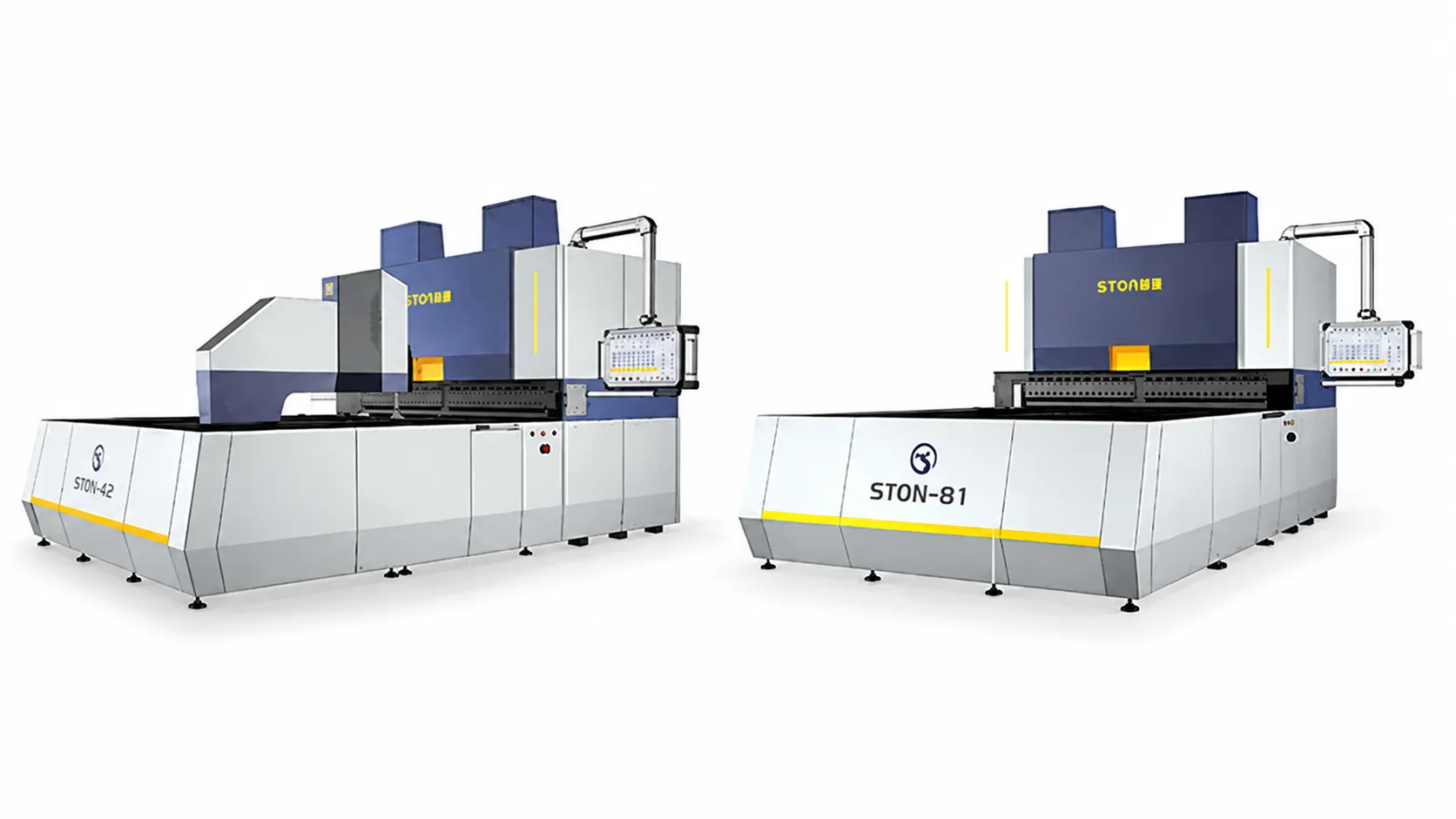
Tanto si está actualizando una línea existente como si está iniciando un nuevo proyecto, STON personalizará una solución CNC para su producción.